

For a local business, visibility in your community isn't just an advantage; it's the lifeline to new customers. Yet, many small and medium-sized businesses struggle to appear in crucial 'near me' searches or on the Google Maps local pack. The problem often lies hidden within your digital footprint, small, overlooked errors in your Google Business Profile, inconsistent online listings, or technical website issues that silently sabotage your rankings. This is where a methodical audit becomes your most powerful tool.
Our comprehensive local SEO audit checklist is designed to demystify the process, providing a step-by-step framework to diagnose issues, prioritize fixes, and build a dominant local search presence. Think of this checklist as the essential first step before implementing a broader strategy; it serves as the foundation for following a practical guide to local SEO for small businesses.
By systematically working through this guide, you will gain a clear understanding of what’s working, what’s broken, and where your greatest opportunities for growth lie. We will move beyond generic advice, offering actionable checks with clear severity labels, practical how-to guidance, and quick-fix solutions to help you reclaim your local market share. This isn't just a list; it's a strategic plan. You will learn to audit everything from your Google Business Profile and local citations to on-page signals, technical health, and review management strategy. Let's begin transforming your online presence from invisible to indispensable.
1. Google Business Profile Optimization
Your Google Business Profile (GBP) is the digital front door to your local business. It’s a free, yet powerful, tool from Google that allows you to manage how your business appears on Google Search and Maps. Think of it as the cornerstone of your entire local SEO strategy; it’s often the very first interaction a potential customer has with your brand online. A fully optimized profile directly influences your visibility in the coveted "Local Pack" and can significantly boost calls, website visits, and foot traffic.
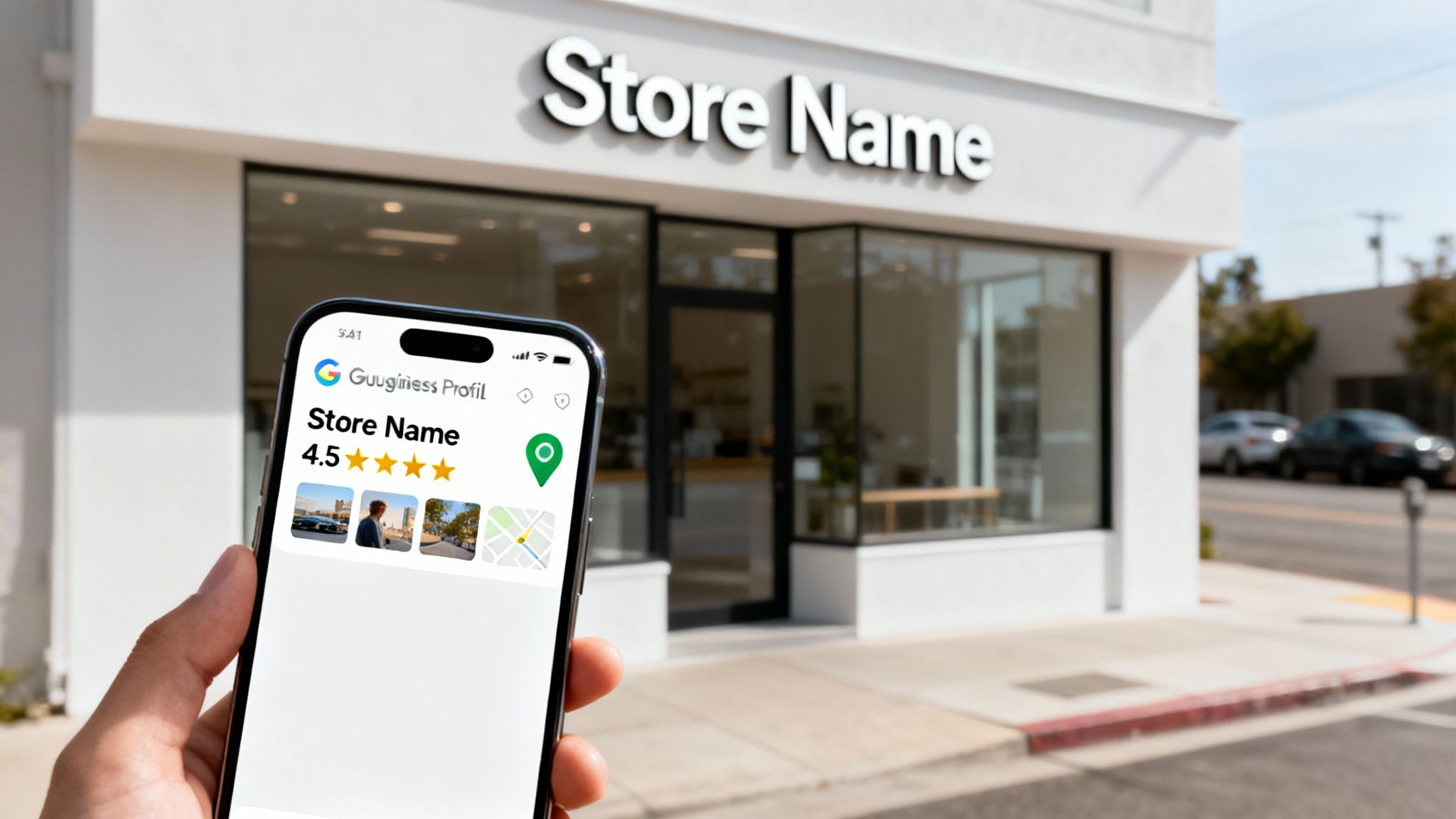
This profile displays crucial information like your business name, address, phone number (NAP), hours of operation, photos, services, and customer reviews. For instance, a local restaurant can use GBP to feature its menu and daily specials, while a dental practice can showcase service offerings and build trust with patient testimonials. This is a non-negotiable first step in any local SEO audit checklist.
Actionable GBP Audit Checklist
To ensure your GBP is working for you, not against you, perform these checks:
- Complete All Sections: Go through every field in your GBP dashboard. Have you filled out your service areas, attributes (like "women-led" or "wheelchair accessible"), and a detailed business description? Every empty field is a missed opportunity.
- Primary & Secondary Categories: Is your primary category the most accurate representation of your core business? Have you added all relevant secondary categories? An HVAC company should have "HVAC Contractor" as primary but could add "Air Conditioning Repair Service" and "Furnace Repair Service" as secondary.
- Photos & Videos: Audit your media. Do you have at least 10-15 high-quality, recent photos of your storefront, team, products, and work-in-progress?
- Q&A Section: Proactively populate the Questions & Answers section with common customer inquiries. This lets you control the narrative and provide helpful information upfront.
- Regular Posts: Use the GBP Posts feature to share updates, offers, and events. Aim for at least one post per week to show Google your profile is active.
For businesses in highly competitive fields like law, mastering this platform is critical. For advanced strategies to optimize your Google Business Profile and dominate local search, consider these 10 Proven Google Business Profile Tweaks for Attorneys.
2. Local Citations and Local Link Building
Beyond your website and GBP, your business's online footprint extends across a vast ecosystem of directories, websites, and apps. Local citations, which are online mentions of your Name, Address, and Phone number (NAP), act as digital breadcrumbs that confirm your business's existence and location to search engines. Consistent, accurate citations across reputable platforms like Yelp, Apple Maps, and industry-specific directories build immense trust with Google, reinforcing that you are a legitimate local entity.
This part of your local SEO audit checklist is about verifying and standardizing this crucial data. For example, a local law firm must ensure its NAP is identical on Avvo, FindLaw, and its own website. Even a small discrepancy, like using "St." on one site and "Street" on another, can dilute your authority and confuse search engines, negatively impacting your local search rankings. Coupled with acquiring links from other local businesses, this creates a powerful signal of local relevance.
Actionable Citations & Links Audit Checklist
To ensure your digital footprint is accurate and authoritative, perform these checks:
- Conduct a NAP Audit: Use a tool like BrightLocal or Semrush to scan for your business listings across the web. Create a spreadsheet to track inconsistencies in your business name, address, or phone number. Even one wrong digit can send customers to a competitor.
- Prioritize High-Authority Directories: Have you claimed and optimized your listings on major platforms like Yelp, Facebook, Apple Maps, and LinkedIn? These are foundational and often the most visible to customers.
- Clean Up Duplicates & Inaccuracies: Your audit will likely uncover duplicate listings or old, incorrect information. Take the time to claim, correct, and merge these duplicates to consolidate your online authority.
- Build Industry-Specific Citations: Go beyond the generic directories. A local restaurant should be listed on TripAdvisor and Zomato, while a home services contractor needs a presence on Angi and HomeAdvisor. These niche citations are highly relevant signals.
- Pursue Local Links: Identify opportunities to get links from other local websites. Sponsoring a local charity event, joining the Chamber of Commerce, or partnering with a neighboring non-competing business can all result in valuable, contextually relevant backlinks.
3. Local Keyword Research and Targeting
While your GBP acts as the digital storefront, your website's content is what draws customers in. Local keyword research is the process of identifying the specific phrases and questions your local customers are typing into Google. It’s about understanding their intent, not just their words. Targeting these terms ensures your content directly answers their queries, establishing relevance and authority in the eyes of both search engines and potential clients.
Unlike broad SEO, local SEO focuses on geographic-specific terms like "emergency vet in downtown Austin" or "best tacos near me." A boutique fitness studio in Denver, for example, must target "CrossFit gym in LoHi" instead of just "CrossFit" to attract nearby members. This targeted approach connects you with high-intent searchers who are actively looking to make a purchase or visit a business in your area, making it a critical part of any local SEO audit checklist.
Actionable Local Keyword Audit Checklist
To ensure you're speaking your customers' language, perform these checks:
- Geographic Modifiers: Audit your primary service and product keywords. Are you consistently pairing them with geographic modifiers like your city, state, neighborhood, and zip code? Every page should have a local focus.
- "Near Me" & Intent-Based Queries: Are you creating content that naturally incorporates "near me" phrasing and answers local questions? Think about creating a FAQ page or blog posts like "What to Look for in a Plumber in [Your City]."
- Competitor Keyword Gaps: Analyze the top-ranking local competitors for your main services. What keywords are they ranking for that you aren't? Tools like Semrush or Ahrefs can reveal these valuable opportunities.
- Location-Specific Pages: If you serve multiple distinct areas, do you have dedicated landing pages for each? A page for "transmission repair in Round Rock" and another for "transmission repair in Pflugerville" will outperform a single generic page.
- Service-Specific Keywords: Go beyond your main category. A car repair shop should optimize for long-tail keywords like "honda civic oil change in [neighborhood]" to capture highly specific, conversion-ready traffic.
4. On-Page Local SEO Optimization
On-page local SEO involves optimizing the actual content and HTML source code of your website pages to signal geographic relevance to search engines. While your Google Business Profile acts as your digital storefront, your website is your digital headquarters. Optimizing it with local signals tells Google exactly which communities you serve, making it more likely to show your site for location-specific searches like "plumber near me" or "best tacos in Austin."
This process involves strategically weaving location-based keywords into your page titles, headers, body content, and image alt text. For example, a home services company creates dedicated pages for each suburb it serves, detailing specific services offered there. Similarly, a law firm might optimize its service pages with location modifiers like "family law attorney in Brooklyn" instead of a generic "family law attorney." A comprehensive local SEO audit checklist must scrutinize these on-page elements.
Actionable On-Page SEO Audit Checklist
To ensure your website is speaking the right local language to Google, perform these checks:
- Geographic Keywords: Audit your key pages (homepage, service pages, contact page). Is your city, region, or neighborhood mentioned in the page title, meta description, H1 heading, and within the first 100 words of content? Avoid keyword stuffing; the usage must feel natural.
- Location-Specific Pages: If you serve multiple areas, do you have unique, dedicated landing pages for each one? A generic "Areas We Serve" list is not enough. Each page should have unique content (at least 300-500 words) relevant to that specific location.
- NAP on Website: Is your business Name, Address, and Phone number (NAP) information prominently displayed, ideally in the website's footer or a dedicated contact section? It must be identical to your GBP listing.
- Local Schema Markup: Check your site's code or use a tool to see if you have implemented LocalBusiness schema. This structured data explicitly tells search engines your address, hours, and business type, helping them understand and display your information accurately.
- Image Optimization: Are your website images optimized? Audit your image file names and alt text to ensure they include local keywords where appropriate (e.g., alt="austin-tx-roofer-installing-shingles").
5. Reviews Management and Response Strategy
Online reviews are the modern-day word-of-mouth and a powerful trust signal for both potential customers and Google's local ranking algorithms. A proactive reviews management strategy is no longer optional; it's a core component of local SEO. This involves systematically encouraging customers to leave feedback, monitoring reviews across key platforms, and responding professionally to both positive and negative comments. A strong, positive review profile directly impacts your local pack visibility, click-through rates, and ultimately, your bottom line.

Managing your online reputation demonstrates to search engines that your business is active, engaged, and values customer feedback. For example, a restaurant that uses in-store QR codes linking to its Google review page can significantly increase review volume. Likewise, an automotive service center that responds to all negative reviews within 24 hours with a proposed solution can often turn a dissatisfied customer into a loyal advocate. This part of your local SEO audit checklist is about building social proof and credibility.
Actionable Reviews Audit Checklist
To ensure your review strategy is an asset, not a liability, perform these checks:
- Systematic Request Process: Do you have a consistent method for asking for reviews? This could be automated email or SMS follow-ups, printed cards with QR codes, or personal requests at the point of sale. If you're not asking, you're not getting.
- Platform Focus: While reviews on Yelp and industry-specific sites are valuable, are you prioritizing Google reviews? They hold the most weight for local search rankings.
- Response Rate & Speed: Audit your response rate. Are you responding to all, or at least most, reviews? For negative reviews, is your response time under 48 hours? A quick, professional response can mitigate damage.
- Response Quality: Review your past responses. Are they personalized and professional, or generic and robotic? Avoid boilerplate replies and address specific points mentioned by the customer.
- Website Integration: Are you showcasing your best reviews on your website? Using a review widget can build immediate trust with visitors.
To centralize your efforts and save time, consider using review management software like Birdeye or BrightLocal. These platforms can help you monitor new reviews across multiple sites and streamline your response workflow, making this critical SEO task more manageable.
6. Mobile Optimization and Local Search Intent
In today's world, local search is overwhelmingly mobile. With a staggering number of "near me" searches happening on smartphones, your website's mobile experience isn't just a feature; it's a fundamental requirement. Google's mobile-first indexing means the mobile version of your site is the baseline for how Google determines your rankings. A clunky, slow, or hard-to-navigate mobile site directly harms your ability to attract local customers, making it a critical part of any local SEO audit checklist.
This focus on mobile goes beyond just responsive design. It's about understanding the intent of a mobile user. They are often on the go, looking for quick answers like directions, hours, or a phone number. For instance, a local pizzeria with a prominent click-to-call button and a one-tap ordering process is perfectly aligned with mobile intent. Similarly, a plumber who ensures their emergency service number is immediately visible on mobile devices can capture high-intent customers at the moment of need.
Actionable Mobile Audit Checklist
Perform these checks to ensure your website is built for the mobile-first world:
- Run a Mobile-Friendly Test: Use Google's free Mobile-Friendly Test tool to get an immediate pass or fail score. This is your first, non-negotiable step.
- Check Click-to-Call Functionality: Ensure all phone numbers on your site are clickable, opening the user's phone app. This simple feature dramatically reduces friction for potential customers. Place a phone icon or number prominently in your mobile header.
- Audit Page Speed: Use tools like Google PageSpeed Insights to analyze your mobile loading time. A load time of over three seconds can cause users to abandon your site. Identify and compress large images and minimize code.
- Assess User Experience (UX): Are your forms easy to fill out with minimal fields? Is your navigation simple to use with a thumb? Can users easily find your address and directions?
- Verify Above-the-Fold Content: Check that your most critical information, like your business name, phone number, and primary call-to-action, is visible on a mobile screen without any scrolling.
Optimizing your site's loading time is one of the most impactful mobile improvements you can make. Dive deeper into the importance of speed and discover how website performance impacts your bottom line.
7. Schema Markup and Structured Data Implementation
Think of schema markup as a translator that speaks directly to search engines. It’s a specialized code, or structured data, that you add to your website's backend to give Google and other search engines explicit context about your business. This code helps them understand not just what your content says, but also what it means. For local businesses, this is a game-changer for standing out in search results.
Implementing the correct schema allows search engines to display your information as "rich snippets," those eye-catching search results with star ratings, event dates, or pricing. For example, a local medical practice can use LocalBusiness schema to display its hours and appointment options directly in the search results, while a restaurant can use it to show its price range and cuisine type. This enhanced visibility can dramatically increase click-through rates.
Actionable Schema Audit Checklist
To ensure your structured data is correctly implemented and providing maximum benefit, perform these checks:
- Implement Core Local Schema: Have you implemented the
LocalBusinessandOrganizationschema types? This is the absolute minimum, providing search engines with your verified business name, address, phone number (NAP), and hours. - Leverage Service & Review Schema: Go beyond the basics. Are you using
Serviceschema to detail specific offerings orReviewandAggregateRatingschema to pull your star ratings directly into the SERPs? This builds immediate trust with searchers. - Validate Your Code: Use Google’s Rich Results Test tool to audit your implementation. Invalid or error-filled schema is useless. The tool will pinpoint exactly what needs to be fixed.
- Use JSON-LD Format: Check that your schema is implemented using JSON-LD. This is Google's recommended format as it's easier to implement and manage without interfering with your website's HTML.
- Check for Consistency: Does the information in your schema markup (like your address and phone number) perfectly match the information on your website and your Google Business Profile? Any discrepancy can confuse search engines.
8. Local Content Creation and Community Engagement
Beyond standard on-page SEO, creating content that speaks directly to your local community is a powerful way to establish topical authority and relevance. This strategy involves developing blog posts, guides, and resources that address the specific interests, needs, and events happening in your service area. It signals to Google that you are not just located in a community, but you are an active, knowledgeable participant within it. This is a crucial element of a comprehensive local SEO audit checklist.
This content demonstrates your expertise in a local context, attracting highly relevant traffic and building trust with potential customers. For example, a veterinary clinic could publish a guide to the best dog-friendly parks in their city, while a real estate agent might create detailed neighborhood profiles covering schools, market data, and community events. This approach transforms your website from a simple digital brochure into a valuable local resource, attracting natural backlinks and social shares from within your community.
Actionable Local Content Audit Checklist
Audit your current content strategy to see if you are truly connecting with your local audience:
- Review Existing Content: Does any of your current content have a local angle? If not, identify opportunities to "localize" existing posts. A generic post on "Home Maintenance Tips" can be updated to "Winter Home Maintenance Tips for Austin Homeowners."
- Identify Local Topics: Are you covering local news, events, or community-specific issues? Brainstorm topics that matter to your local audience. A fitness studio could cover local running routes or partner with nearby healthy restaurants for a feature.
- Community Partnerships: Have you featured local partners, clients, or community leaders in your content? This cross-promotion builds relationships and expands your reach. Showcasing community involvement builds immense local trust.
- Location-Specific Pages: Beyond a single "locations" page, have you created dedicated pages for the specific neighborhoods or cities you serve? These pages should feature unique, helpful content relevant to that specific area.
- Content Freshness & Frequency: How often are you publishing locally-focused content? Aim to publish at least two to four pieces of location-specific content monthly to maintain relevance and show activity.
By consistently creating content that serves your immediate community, you reinforce your local authority. To explore how this fits into a broader strategy, discover more about the essentials of local business digital marketing on giddsmedia.com.
9. Multi-Location SEO and Management
For businesses with more than one physical storefront, multi-location SEO is a critical and complex layer of your digital strategy. It involves optimizing your online presence to rank in local search results for each individual location, ensuring customers find the specific branch nearest to them. This goes beyond a simple website listing; it requires a dedicated strategy to manage the unique online identity of every single business address. This is a non-negotiable part of a local SEO audit checklist for franchises, chains, or service providers with multiple offices.
This process involves creating and managing distinct Google Business Profiles, citations, and website content for each location. For example, a national bank must ensure a search for "bank near me" in Austin shows its local branch information, not the corporate headquarters in another state. Similarly, a regional plumbing company needs to create separate, optimized landing pages for each city it serves, featuring local testimonials and area-specific keywords to attract relevant customers.
Actionable Multi-Location Audit Checklist
To ensure your multi-location strategy is effective, perform these checks:
- Individual Location Pages: Does each of your locations have its own unique, optimized page on your website? These pages should feature the specific NAP (Name, Address, Phone Number), hours, services, staff, and local-centric content. Duplicate content across location pages is a major red flag.
- GBP for Each Location: Have you created and verified a separate Google Business Profile for every single physical location? Each profile must be managed individually with its own photos, posts, and review management strategy.
- NAP Consistency Per Location: Audit the NAP information for each branch across the web. Is the specific address and phone number for your Dallas location consistent on its GBP, its website landing page, and its citations (like Yelp and Yellow Pages)?
- Location Schema Markup: Check if each location page has its own
LocalBusinessschema markup. This structured data explicitly tells search engines the precise details of that specific branch, improving visibility. - Review Management: Are you monitoring and responding to reviews for each location individually? A centralized system is good, but responses should feel local and address specific customer experiences at that branch.
10. Local SEO Technical Audit and Monitoring
Beyond content and profiles, the technical health of your website forms the bedrock of your local SEO efforts. A technical local SEO audit is a deep-dive into your site's backend, identifying issues that can hinder Google's ability to crawl, index, and rank your pages effectively for local searches. Think of it as ensuring the foundation of your house is solid before you start decorating; without a strong technical base, all other SEO efforts can be compromised.
This audit inspects everything from site speed and mobile-friendliness to security (HTTPS) and schema markup. For example, a local service provider might find that slow mobile page speed is causing high bounce rates from potential customers searching on their phones. Fixing this technical issue directly improves user experience and can lead to higher rankings and more service calls. Including this step in your local seo audit checklist is critical for long-term success.
Actionable Technical SEO Audit Checklist
To keep your website's foundation strong, perform these regular technical checks:
- Crawl & Indexing Status: Regularly check Google Search Console for any crawl errors or indexing problems. Are your important location pages being indexed correctly? If Google can't find your page, it can't rank it.
- Page Speed & Core Web Vitals: Use Google's PageSpeed Insights to test your key landing pages. Is your site loading quickly on mobile devices? A slow site frustrates users and hurts rankings.
- Mobile-Friendliness: Verify your site passes Google's Mobile-Friendly Test. A local business website that is difficult to navigate on a smartphone will lose customers to competitors.
- Local Schema Markup: Audit your
LocalBusinessschema using the Rich Results Test. Ensure your NAP, hours, and other business details are marked up correctly and consistently across all location pages. - Site Security: Confirm your entire website uses HTTPS. An SSL certificate is a known ranking factor and builds trust with visitors who might be submitting personal information.
A strong technical SEO foundation ensures your other marketing efforts can achieve their full potential. For a deeper understanding of these concepts, review these technical SEO best practices on giddsmedia.com.
10-Point Local SEO Audit Comparison
| Local SEO Tactic | 🔄 Implementation Complexity | ⚡ Resource Requirements | 📊 Expected Outcomes | 💡 Ideal Use Cases | ⭐ Key Advantages |
|---|---|---|---|---|---|
| Google Business Profile Optimization | Low–Medium — ongoing updates and verification 🔄 | Low cost; time for posts, photos, review replies ⚡ | Higher local visibility, improved CTR, better Map rankings 📊 ⭐⭐⭐⭐ | Brick-and-mortar and service-area businesses needing local discovery 💡 | Free, direct control over public listing; improves Map pack placement ⭐⭐⭐⭐ |
| Local Citations & Local Link Building | Medium–High — manual outreach and consistency work 🔄🔄 | Moderate–High: time, outreach tools, citation services ⚡ | Stronger local authority and improved local rankings 📊 ⭐⭐⭐⭐ | Multi-location businesses and those building local authority 💡 | Builds trust/authority and referral traffic; supports local pack ranking ⭐⭐⭐⭐ |
| Local Keyword Research & Targeting | Low–Medium — research + ongoing monitoring 🔄 | Low: keyword tools and analyst time ⚡ | More relevant traffic and higher conversion intent from local searches 📊 ⭐⭐⭐ | Businesses targeting city/neighborhood searches or seasonal demand 💡 | Identifies high-intent, easy-to-rank opportunities; informs content strategy ⭐⭐⭐ |
| On-Page Local SEO Optimization | Medium — content + markup + site edits 🔄 | Moderate: content creation and SEO resources ⚡ | Improved relevance signals and organic/local pack performance 📊 ⭐⭐⭐⭐ | Any local website needing better geographic relevance 💡 | Direct control over on-site signals; cost-effective foundation for local SEO ⭐⭐⭐ |
| Reviews Management & Response Strategy | Medium — continuous monitoring and workflows 🔄 | Low–Moderate: time, possible review management software ⚡ | Enhanced reputation, higher ratings, measurable CTR/conversion gains 📊 ⭐⭐⭐⭐ | Customer-facing businesses where reviews influence decisions (restaurants, clinics) 💡 | Reviews impact local rankings and trust; generates UGC and feedback ⭐⭐⭐⭐ |
| Mobile Optimization & Local Search Intent | Medium–High — technical performance and UX work 🔄🔄 | High: dev resources, speed optimization, testing ⚡ | Better mobile rankings, lower bounce, higher click-to-call conversions 📊 ⭐⭐⭐⭐ | Businesses with high mobile/search traffic or “near me” intent 💡 | Essential for mobile-first indexing; increases on-the-go conversions ⭐⭐⭐⭐ |
| Schema Markup & Structured Data Implementation | Medium — technical markup and validation 🔄 | Low–Moderate: developer time and validation tools ⚡ | Rich snippets, improved SERP appearance and CTR 📊 ⭐⭐⭐ | Businesses wanting enhanced search listings (reviews, hours, events) 💡 | Enables rich results and clearer search understanding; relatively quick ROI ⭐⭐⭐ |
| Local Content Creation & Community Engagement | Medium — ongoing content production 🔄 | Moderate: writers, local research, promotion ⚡ | Builds local authority, attracts links and engagement over time 📊 ⭐⭐⭐ | Businesses aiming to differentiate locally and foster community ties 💡 | Strengthens local brand, creates linkable assets, drives loyalty ⭐⭐⭐ |
| Multi-Location SEO & Management | High — scale, consistency, and coordination 🔄🔄🔄 | High: tools, dedicated staff, per-location content ⚡ | Visibility across multiple markets; location-level traffic and conversions 📊 ⭐⭐⭐⭐ | Franchises, chains, and businesses with many physical locations 💡 | Scales local presence; provides granular performance data per location ⭐⭐⭐⭐ |
| Local SEO Technical Audit & Monitoring | High — comprehensive technical checks and fixes 🔄🔄 | Moderate–High: tools (Screaming Frog, GSC), developer time ⚡ | Identifies/fixes issues that block indexing and ranking; improved site health 📊 ⭐⭐⭐⭐ | Any site with indexing, speed, or crawl issues; enterprise/local priorities 💡 | Prevents critical problems, prioritizes fixes, and sustains SEO performance ⭐⭐⭐⭐ |
From Checklist to Action: Your Next Steps for Local SEO Dominance
You have successfully navigated the comprehensive local SEO audit checklist, a critical first step toward amplifying your business's visibility within your local community. This process has illuminated the strengths, weaknesses, and untapped opportunities across your entire digital footprint. From the foundational accuracy of your Google Business Profile to the technical integrity of your website, you now possess a clear, diagnostic view of your current standing.
The real value, however, is not in the completion of the checklist itself, but in the strategic, sustained action that follows. The journey from audit to dominance is paved with prioritized implementation. Think of this audit as your roadmap; now it's time to start driving.
Creating Your Prioritized Action Plan
The sheer number of items on this checklist can feel overwhelming. The key is to avoid analysis paralysis by tackling tasks in a logical sequence based on impact and effort. Your first move should be to address the "Critical" priority items identified in your audit.
-
Immediate Wins (The "Critical" Tier): These are the non-negotiables. Correcting inaccurate NAP information across major directories, claiming and fully optimizing your Google Business Profile, and ensuring your website is mobile-friendly are tasks that deliver the most significant and immediate returns. Fixing these issues stops you from actively losing potential customers and builds a stable foundation for all future efforts.
-
Strategic Growth (The "High" Tier): Once your foundation is solid, focus on the high-impact growth levers. This includes systematically building high-quality local citations, refining your on-page SEO with geo-targeted keywords, and actively cultivating a five-star reputation through a proactive review management strategy. These actions directly influence your ranking potential and how customers perceive your brand.
-
Sustained Momentum (The "Medium" Tier): This is where you build long-term authority. Developing a local content strategy, implementing schema markup for rich snippets, and engaging with your community online fall into this category. These ongoing efforts compound over time, creating a competitive moat that is difficult for others to replicate.
The Marathon Mindset: When to DIY vs. When to Partner Up
Mastering local search is a marathon, not a sprint. Consistent effort is the secret ingredient. While many of the fixes from this local SEO audit checklist can be handled in-house, especially for a single-location business, it's crucial to be realistic about your time and expertise.
Ask yourself these questions:
- Do I have the technical knowledge to diagnose and fix Core Web Vitals issues or implement complex schema?
- Can I dedicate consistent hours each month to building links, creating content, and managing citations?
- For multi-location businesses, do I have the systems to manage individual GBP listings and localized content at scale?
If the answer to any of these is "no," or if your time is better spent serving your customers, it might be the perfect moment to consider professional partnership. An experienced local SEO agency doesn't just execute tasks; they provide strategy, leverage sophisticated tools, and stay ahead of constant algorithm changes. They transform your audit from a to-do list into a dynamic growth engine.
Whether you choose the DIY path or enlist an expert, the goal remains the same: to turn the insights from this audit into measurable results. By taking deliberate, prioritized action, you will not only improve your rankings but also forge a stronger, more profitable connection with the local customers searching for you right now.
Ready to turn your audit findings into a powerful growth strategy? Gidds Media specializes in executing comprehensive local SEO campaigns for Austin businesses, taking the guesswork out of climbing the local search rankings. Schedule a free, no-pressure strategy call with our team to get a clear roadmap for your business's success.


