In 2025, manually sending marketing emails is an inefficient use of time and a missed opportunity for growth. For small and medium-sized businesses, the challenge isn't just about sending emails; it's about sending the right message to the right person at precisely the right moment. This is where email marketing automation tools become essential, transforming your outreach from a time-consuming chore into a powerful, self-sustaining lead generation and nurturing engine. These platforms handle the repetitive tasks of segmenting audiences, triggering email sequences based on user behavior, and personalizing content at scale.
This guide is designed to help you cut through the noise and find the ideal platform for your specific business needs, whether you're an Austin-based home service provider or a startup launching a new WordPress site. We'll move beyond generic feature lists and provide an in-depth analysis of the top 12 email marketing automation tools, complete with screenshots, direct links, and practical use-case scenarios. To truly appreciate the power of email marketing automation, it's beneficial to first understand the broader advantages of streamlining tasks and processes; explore key workflow automation benefits that apply across various business operations. Our goal is to equip you with the insights needed to select a tool that not only saves you time but also delivers measurable results for your business.
1. Mailchimp: The All-in-One Starter
Mailchimp is one of the most recognized email marketing automation tools available, making it a reliable starting point for SMBs and local service providers. Its user-friendly interface and vast library of pre-built templates allow even beginners to launch professional campaigns quickly. The platform excels with its visual customer journey builder, which simplifies the process of creating automated workflows for welcoming new subscribers, re-engaging inactive contacts, or recovering abandoned carts.
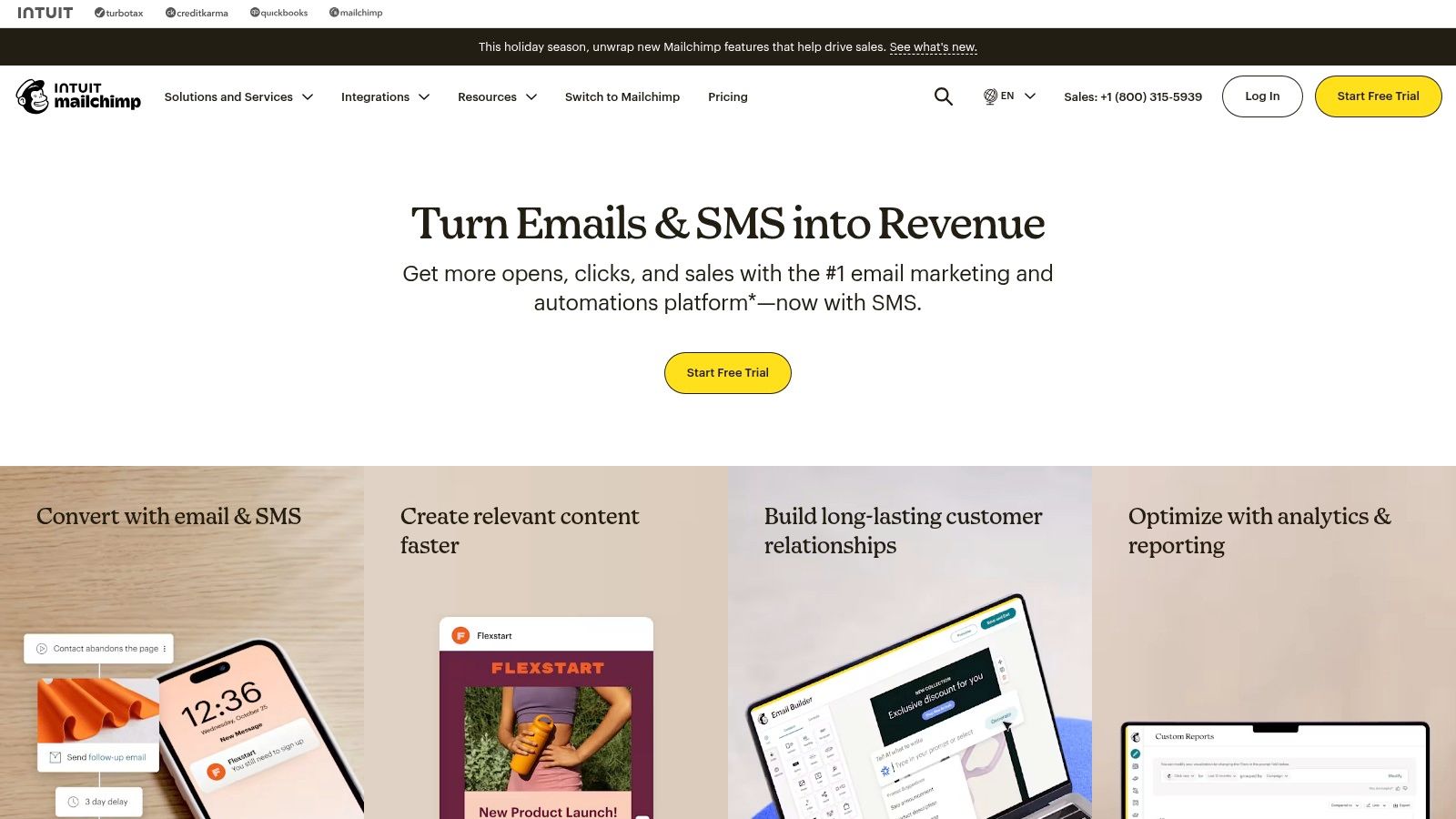
What sets Mailchimp apart for beginners is its guided experience and massive integration ecosystem, connecting seamlessly with platforms like Shopify and WooCommerce. Its A/B testing and segmentation features are robust, allowing you to refine your messaging based on user behavior or predictive demographics. However, its pricing structure can become expensive as your contact list grows, with strict caps on sends and contacts per plan.
Website: https://mailchimp.com
Key Information
| Feature | Details |
|---|---|
| Best For | Businesses seeking an easy-to-use, all-in-one platform with strong e-commerce integrations. |
| Pricing | Free plan available. Paid plans start at $13/month. |
| Pros | Excellent templates, easy-to-use visual automation builder, scales well from free plans. |
| Cons | Can become costly with a large contact list; advanced features are tier-gated. |
2. HubSpot Marketing Hub: The CRM-Powered Engine
HubSpot Marketing Hub is far more than just an email platform; it’s a complete marketing automation suite built directly on its powerful, free CRM. This makes it one of the best email marketing automation tools for businesses that need to align sales and marketing efforts. Its strength lies in using deep customer data from the CRM to create highly personalized, multi-channel automated workflows that extend beyond email to include ads, forms, and social media.
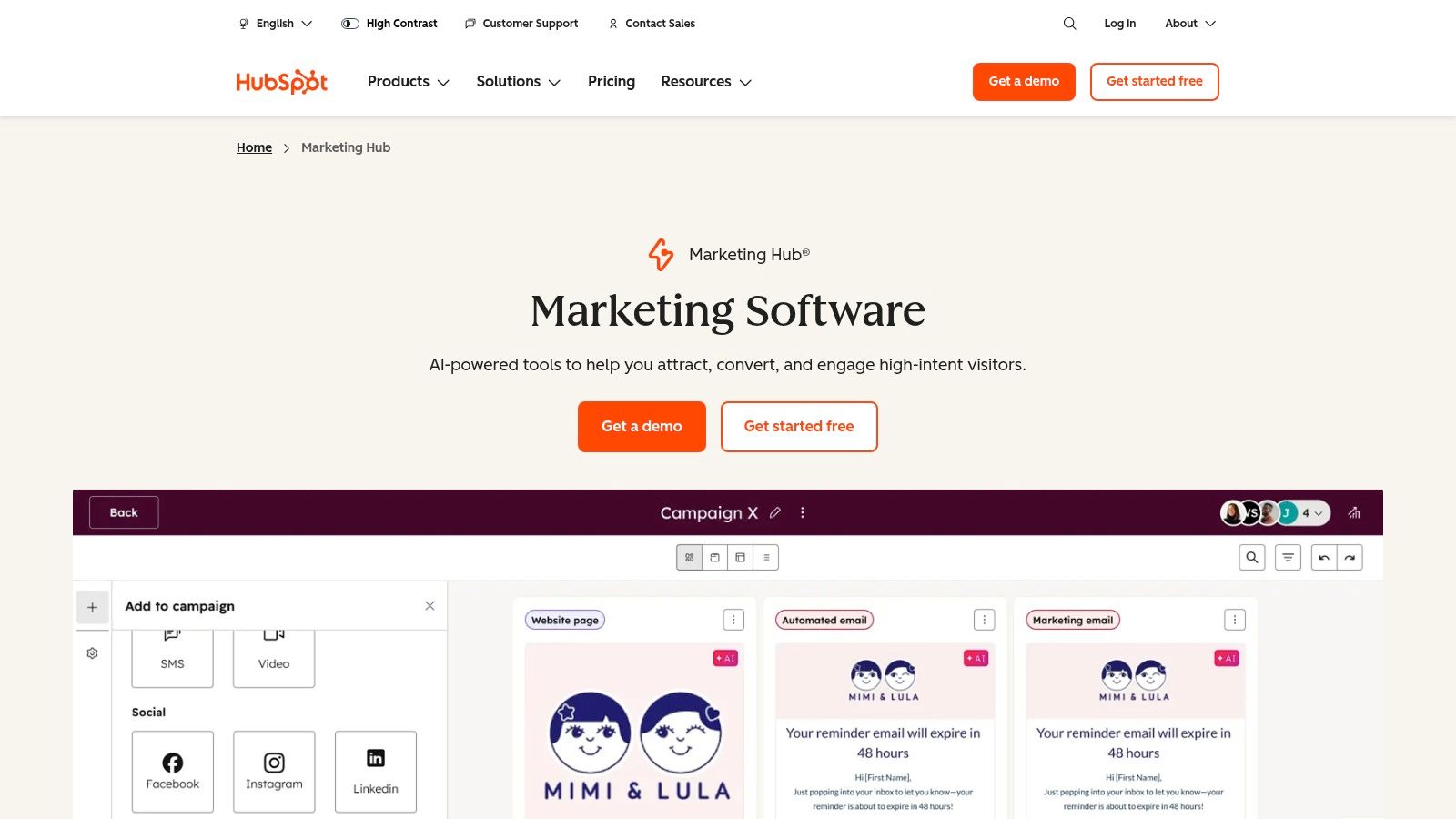
What sets HubSpot apart is its ability to tie every marketing action directly to a contact record, providing a holistic view of the customer lifecycle. The workflow builder supports complex branching logic, allowing you to build sophisticated sequences based on any CRM property. While its entry-level plans are accessible, the true power, including multi-touch attribution and custom reporting, is unlocked in the Professional and Enterprise tiers, which often require onboarding fees. This integrated approach is a core part of a modern startup digital marketing strategy.
Website: https://hubspot.com/products/marketing
Key Information
| Feature | Details |
|---|---|
| Best For | B2B service companies and businesses focused on aligning sales and marketing around a central CRM. |
| Pricing | Limited free tools available. Paid plans start at $18/month. |
| Pros | Unbeatable CRM integration, enterprise-grade analytics on higher tiers, large app marketplace. |
| Cons | Can be expensive with per-seat and contact-tier pricing; requires onboarding fees for Pro/Enterprise. |
3. Klaviyo: The E-commerce Powerhouse
Klaviyo stands out as one of the premier email marketing automation tools built specifically for e-commerce brands, particularly those on Shopify. It excels at creating revenue-driven workflows tied directly to customer behavior on your store. The platform allows for deep segmentation and event-triggered flows, such as browse abandonment, cart recovery, and post-purchase upsells, all personalized with dynamic product blocks.
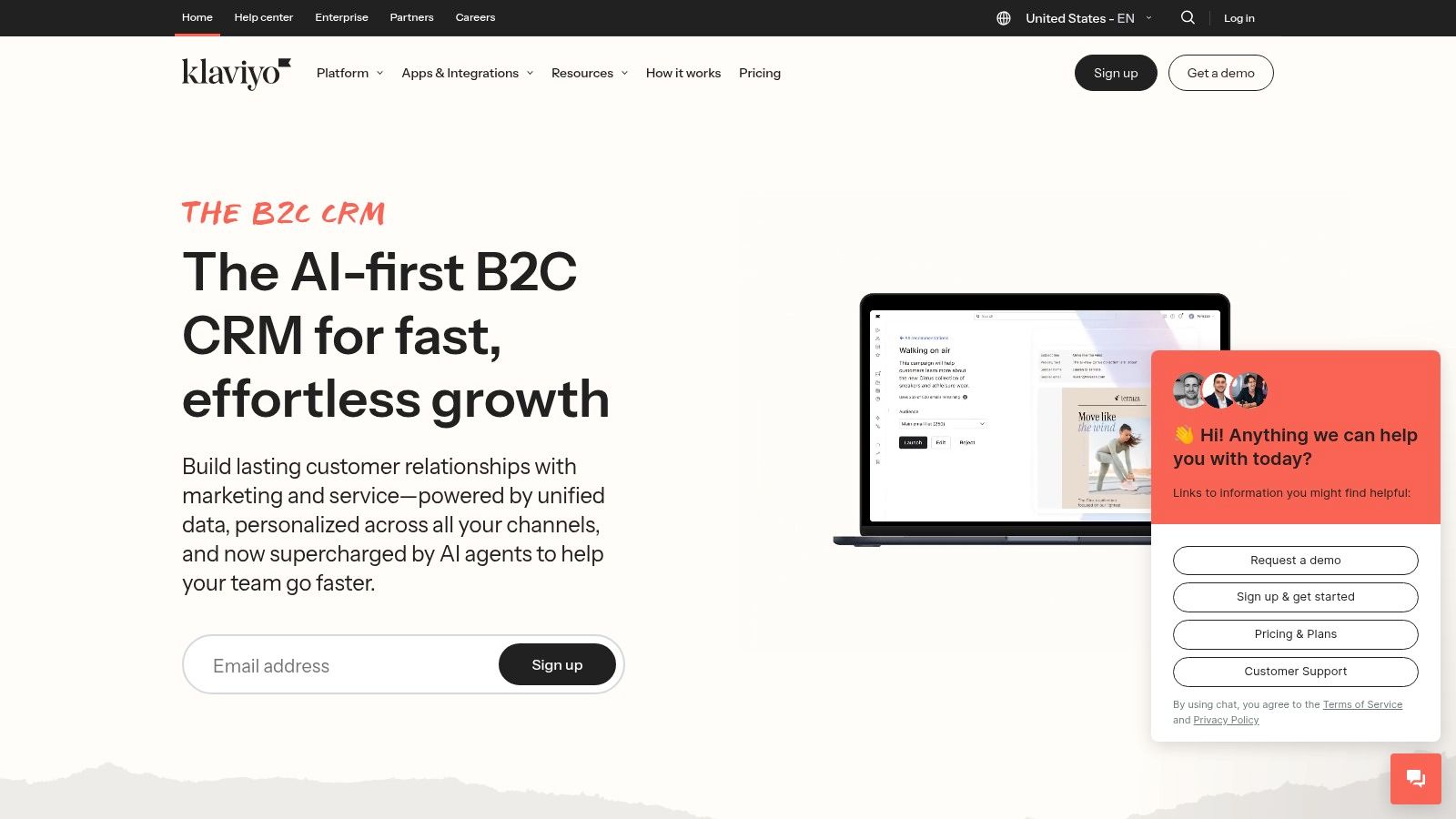
What makes Klaviyo unique is its unified approach to email and SMS/WhatsApp marketing, allowing businesses to create cohesive, multi-channel customer journeys from a single dashboard. Its predictive analytics and robust revenue tracking give clear insights into campaign performance and ROI. However, its pricing scales with active profiles and sends, which can become costly for stores with large, less-engaged lists. Users should also note potential plan changes coming in 2025.
Website: https://klaviyo.com
Key Information
| Feature | Details |
|---|---|
| Best For | E-commerce businesses, especially on Shopify, seeking to drive revenue with advanced, behavior-triggered automations. |
| Pricing | Free plan for up to 250 contacts. Paid plans are based on contact and send volume. |
| Pros | Excellent for store-triggered automation, strong revenue tracking, and product feed personalization. |
| Cons | Pricing can rise significantly at scale; some plan/usage policy changes in 2025 require attention. |
4. ActiveCampaign: The Automation Powerhouse
ActiveCampaign is a mature platform that extends far beyond simple email sends, positioning itself as a comprehensive Customer Experience Automation (CXA) solution. It is one of the most powerful email marketing automation tools for businesses that need sophisticated segmentation and multi-channel communication. The platform's visual automation builder is a standout feature, offering a drag-and-drop interface with pre-built "recipes" to create complex workflows based on user behavior, site visits, and event tracking.
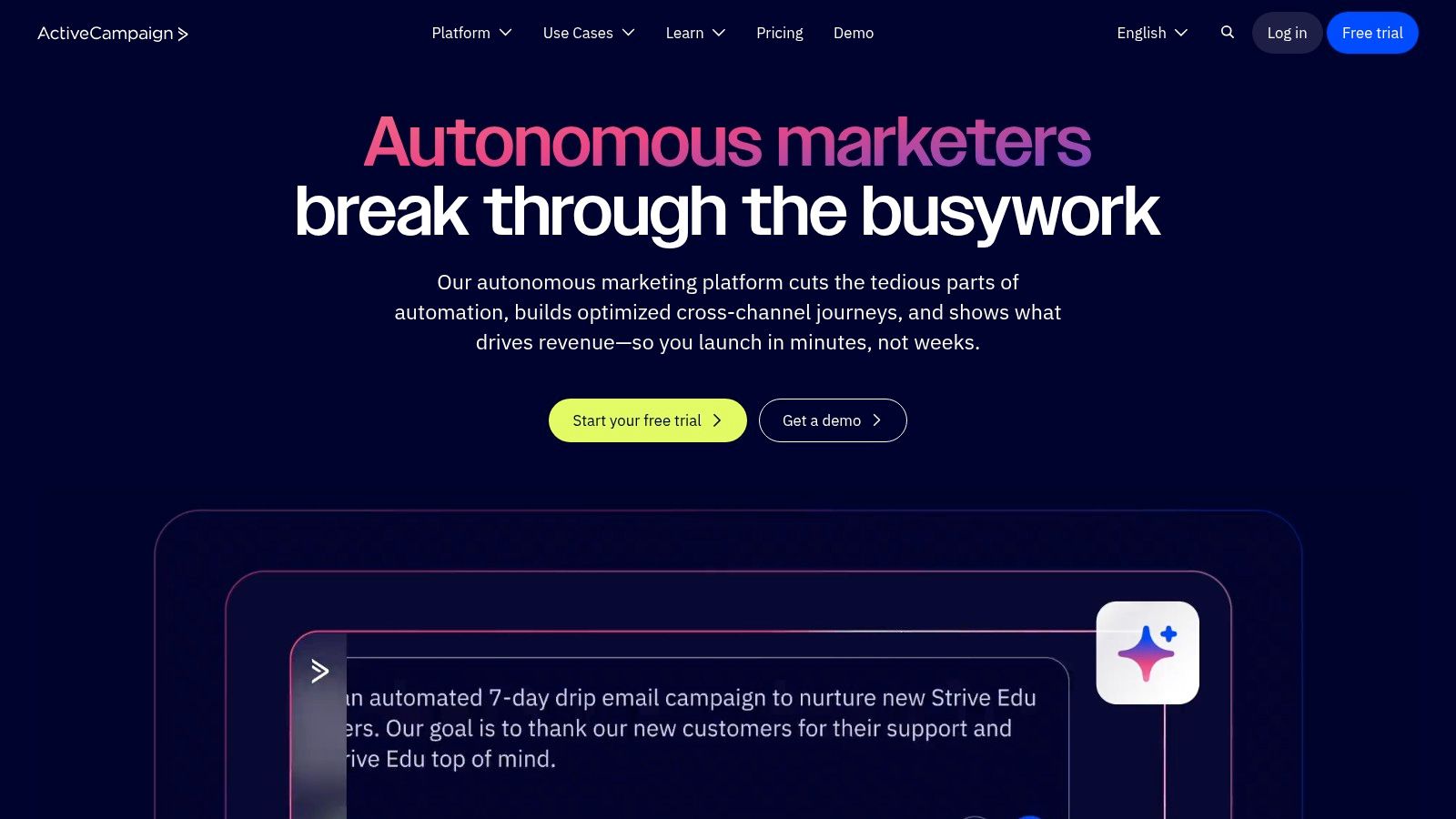
What truly sets ActiveCampaign apart is its integrated CRM and lead scoring system, available even on accessible plans. This allows service providers and SMBs to manage the entire customer lifecycle, from initial contact to loyal client, all within one ecosystem. With over 900 integrations and add-ons for SMS or WhatsApp, it scales effectively as your marketing needs become more complex. While its extensive features can present a learning curve for complete beginners, the depth of its automation capabilities is unmatched at its price point.
Website: https://activecampaign.com
Key Information
| Feature | Details |
|---|---|
| Best For | Growing businesses needing powerful automation, CRM, and segmentation features without enterprise-level costs. |
| Pricing | Plans start at $29/month (billed annually). Pricing scales with contacts and features. |
| Pros | Extremely powerful automations at SMB-friendly prices, integrated CRM and lead scoring, strong migration support. |
| Cons | The interface can be overwhelming for new users; pricing varies significantly based on contact count and plan tier. |
5. Constant Contact: The Small Business Specialist
Constant Contact is a veteran in the email marketing space, positioning itself as a powerful yet approachable solution for small businesses and local service providers. It simplifies the creation of automated campaigns with a straightforward Automation Path Builder, allowing users to set up welcome sequences or anniversary emails with minimal effort. The platform’s strength lies in its all-in-one approach, integrating tools that are particularly useful for brick-and-mortar or service-based businesses.
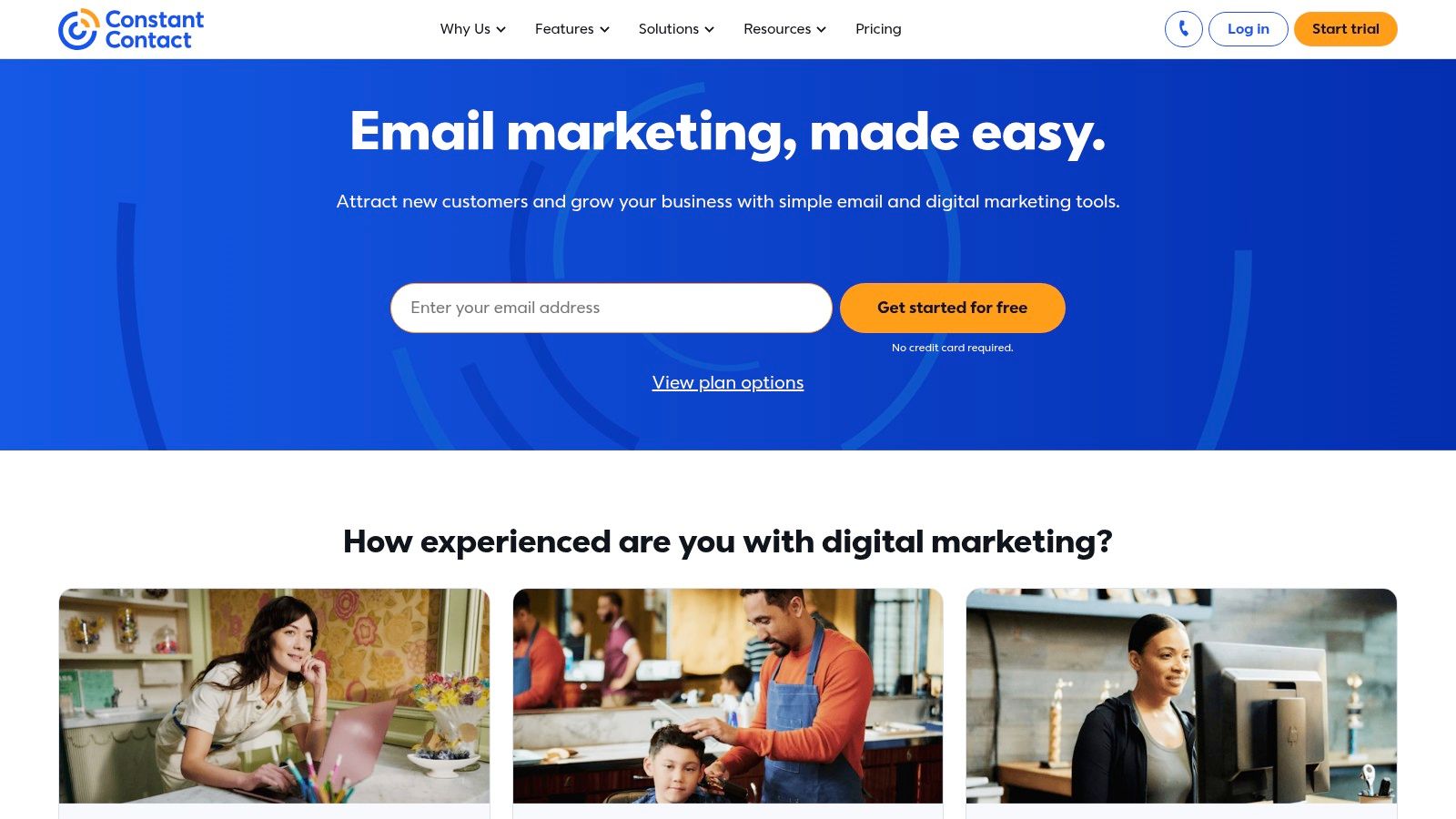
What makes Constant Contact stand out is its inclusion of features beyond standard email, such as event management, surveys, and social posting, all within one interface. This makes it one of the most practical email marketing automation tools for owners who need to manage multiple marketing channels efficiently. For those exploring how to integrate these tools, learning more about local business digital marketing can provide valuable context. While its automation capabilities aren't as complex as some competitors, its ease of use and transparent pricing make it a solid choice for getting started.
Website: https://constantcontact.com
Key Information
| Feature | Details |
|---|---|
| Best For | Small businesses and nonprofits needing an easy-to-use platform with event and social tools. |
| Pricing | Plans start at $12/month. |
| Pros | Guided onboarding, useful extras like event management and surveys, transparent pricing tiers. |
| Cons | Advanced automation and reporting are limited; can get costly as your contact list grows. |
6. Brevo (formerly Sendinblue): The Multi-Channel Communicator
Brevo stands out as a comprehensive, all-in-one messaging platform that goes far beyond standard email marketing automation tools. It empowers businesses to connect with customers across multiple channels, including SMS, WhatsApp, push notifications, and live chat, all from a single dashboard. Its strength lies in offering a unified toolkit for both marketing campaigns and transactional communications, like order confirmations or password resets.
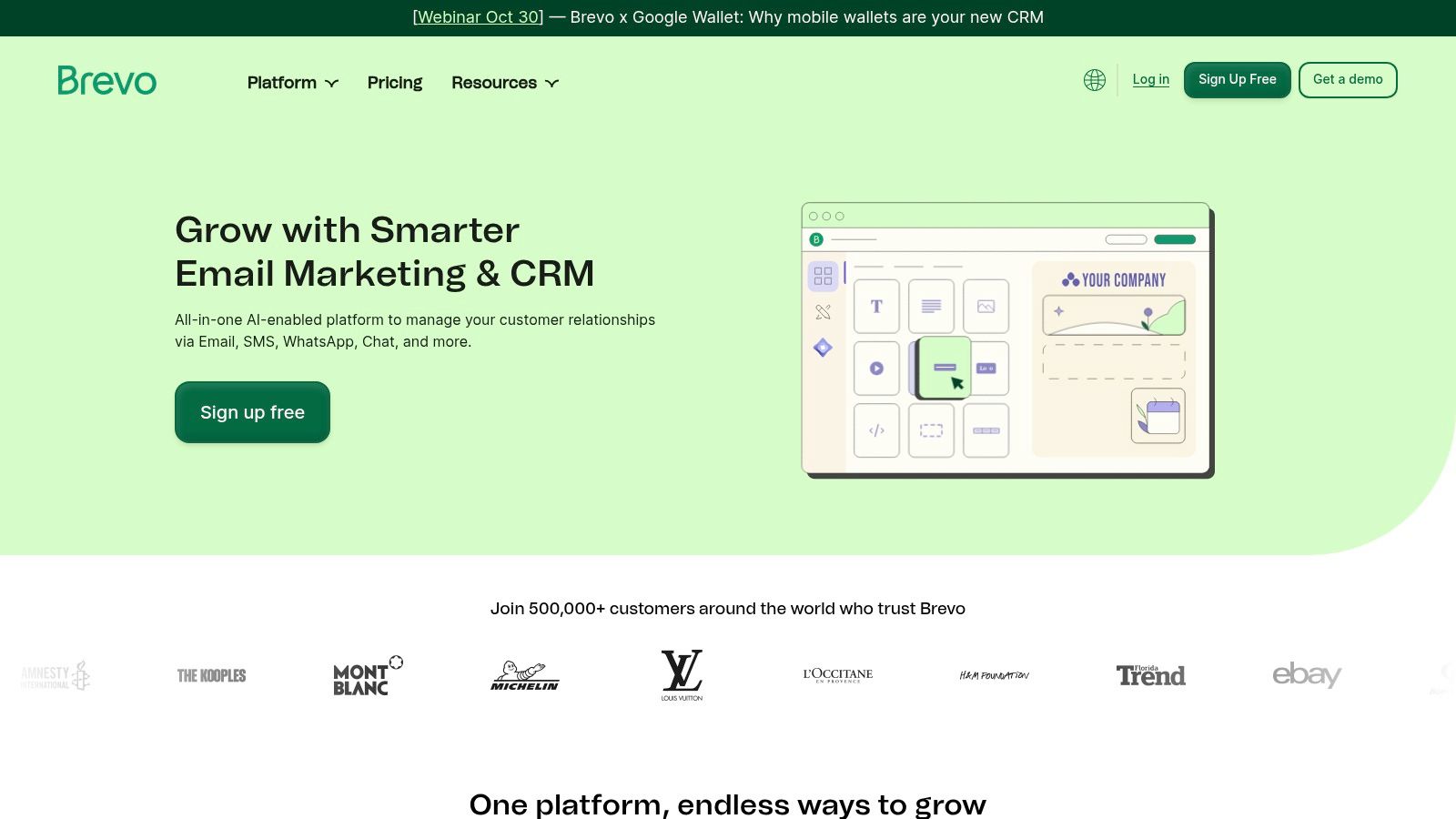
What makes Brevo particularly attractive for SMBs is its exceptionally generous free plan, which allows for 300 emails per day and unlimited contacts. The platform’s automation workflows are robust, allowing you to trigger multi-channel sequences based on user behavior. While the user interface is powerful, its depth means new users should budget some time for setup and learning. However, for businesses needing a cost-effective solution to manage email, SMS, and sales tools together, Brevo offers unparalleled value.
Website: https://brevo.com
Key Information
| Feature | Details |
|---|---|
| Best For | Businesses needing a unified platform for multi-channel outreach (email, SMS, chat) with a generous free tier. |
| Pricing | Free plan available (300 emails/day). Paid plans start at $25/month. |
| Pros | Excellent value combining marketing and transactional tools, strong multi-channel capabilities, generous free plan. |
| Cons | UI can have a learning curve; advanced automation features are gated behind higher-tier plans. |
7. MailerLite: The Creator's Choice for Simplicity
MailerLite stands out as one of the most intuitive and affordable email marketing automation tools, making it a favorite among creators, bloggers, and SMBs. It pairs a clean, minimalist interface with a powerful feature set that extends beyond email. Users can easily build everything from automated welcome sequences to complex, multi-step workflows using its simple drag-and-drop automation builder.
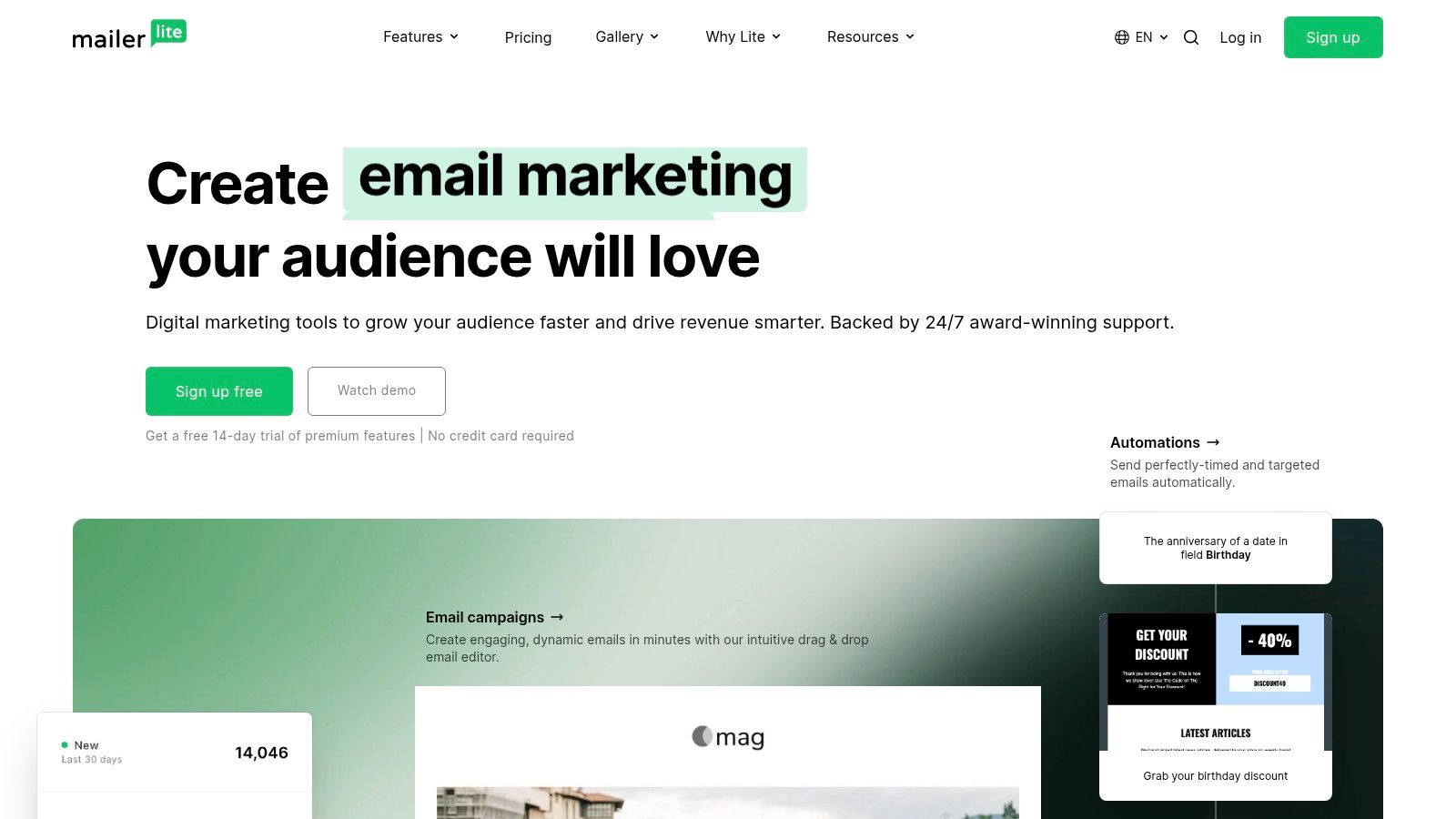
What truly differentiates MailerLite is its inclusion of unlimited websites, blogs, and landing pages even on its lower-priced plans. This unique offering allows businesses to manage their entire lead generation and sales funnel within one ecosystem, including selling digital products and subscriptions directly. While it may lack the deep enterprise-level analytics of some competitors, its clear pricing and generous feature set provide exceptional value for those who don't need overly complex tools.
Website: https://mailerlite.com
Key Information
| Feature | Details |
|---|---|
| Best For | Creators, freelancers, and SMBs needing an all-in-one marketing platform with website and landing page builders. |
| Pricing | Free plan available. Paid plans start at $10/month. |
| Pros | Very affordable pricing, includes websites and digital product sales, clean and user-friendly interface. |
| Cons | Lacks some deep native integrations and advanced enterprise-level features found in other platforms. |
8. Omnisend: The E-commerce Powerhouse
Omnisend is purpose-built for e-commerce, making it one of the most effective email marketing automation tools for online retailers. Its strength lies in combining email, SMS, and push notifications into unified workflows, allowing merchants to create a seamless, multi-channel customer experience. The platform offers a rich library of pre-built automation recipes specifically for e-commerce, such as cart abandonment, welcome series, and post-purchase follow-ups, which can be deployed with minimal setup.
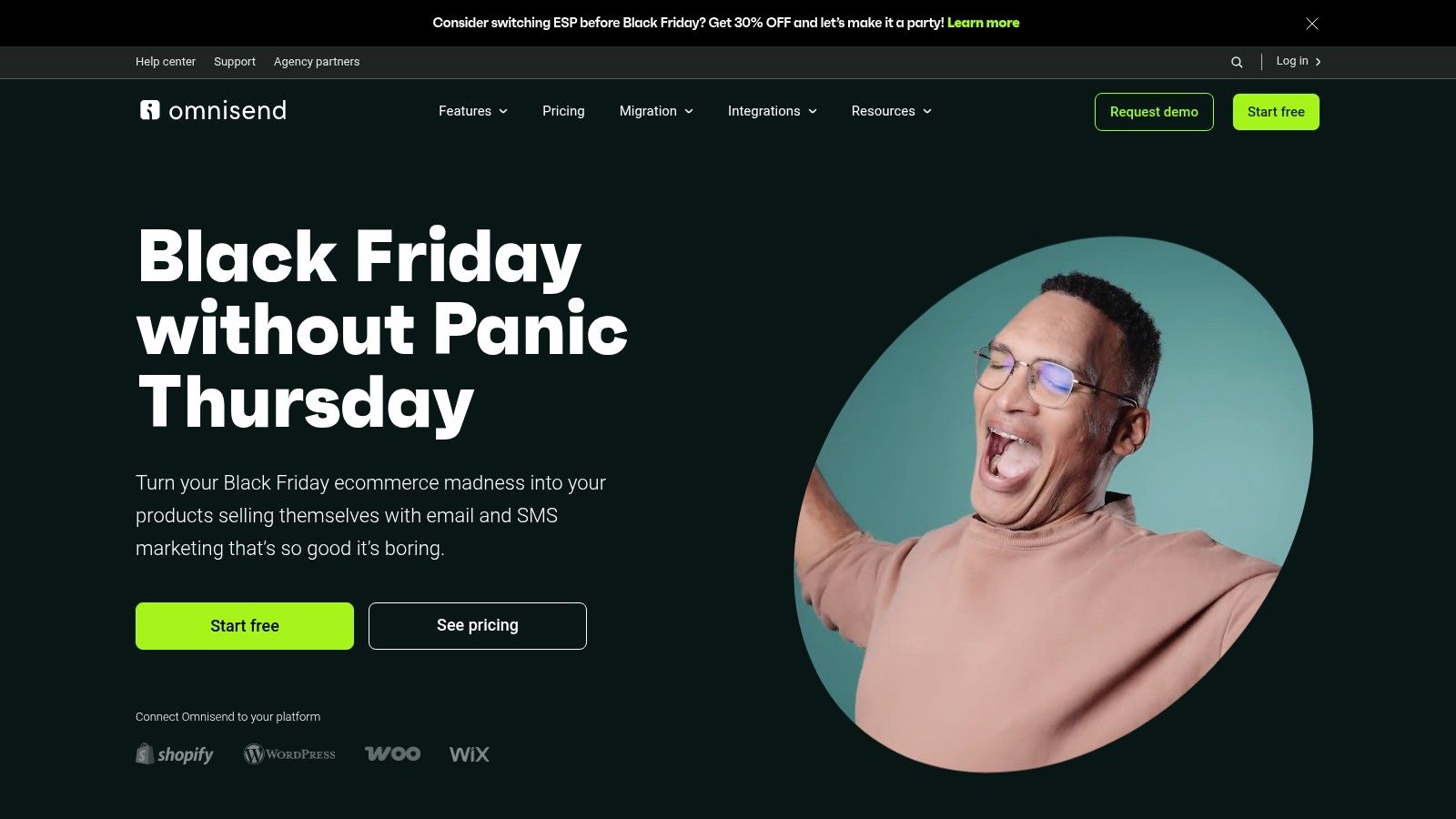
What truly distinguishes Omnisend is its deep integration with platforms like Shopify and BigCommerce, enabling dynamic content like product recommendations and unique discount codes directly within emails. Its segmenting capabilities allow you to target customers based on shopping behavior, campaign engagement, or lifecycle stage. While its free plan is limited, the inclusion of free SMS credits on paid plans provides significant value for businesses looking to adopt an omnichannel marketing strategy without a separate SMS provider.
Website: https://omnisend.com
Key Information
| Feature | Details |
|---|---|
| Best For | E-commerce businesses, especially on Shopify or BigCommerce, seeking integrated email and SMS automation. |
| Pricing | Free plan available. Paid plans start at $16/month. |
| Pros | Excellent pre-built e-commerce workflows, combined email and SMS channels, generous free SMS credits on Pro plans. |
| Cons | Free plan is quite limited; more advanced features require higher-tier plans. |
9. Drip: The E-commerce Powerhouse
Drip is one of the most powerful email marketing automation tools built from the ground up for e-commerce brands. Its entire platform is geared toward driving revenue, offering deep integrations with Shopify, BigCommerce, and WooCommerce that go beyond simple contact syncing. The visual workflow builder lets you create sophisticated, event-based automations, such as sending a targeted offer when a customer views a specific product or completes their second purchase.
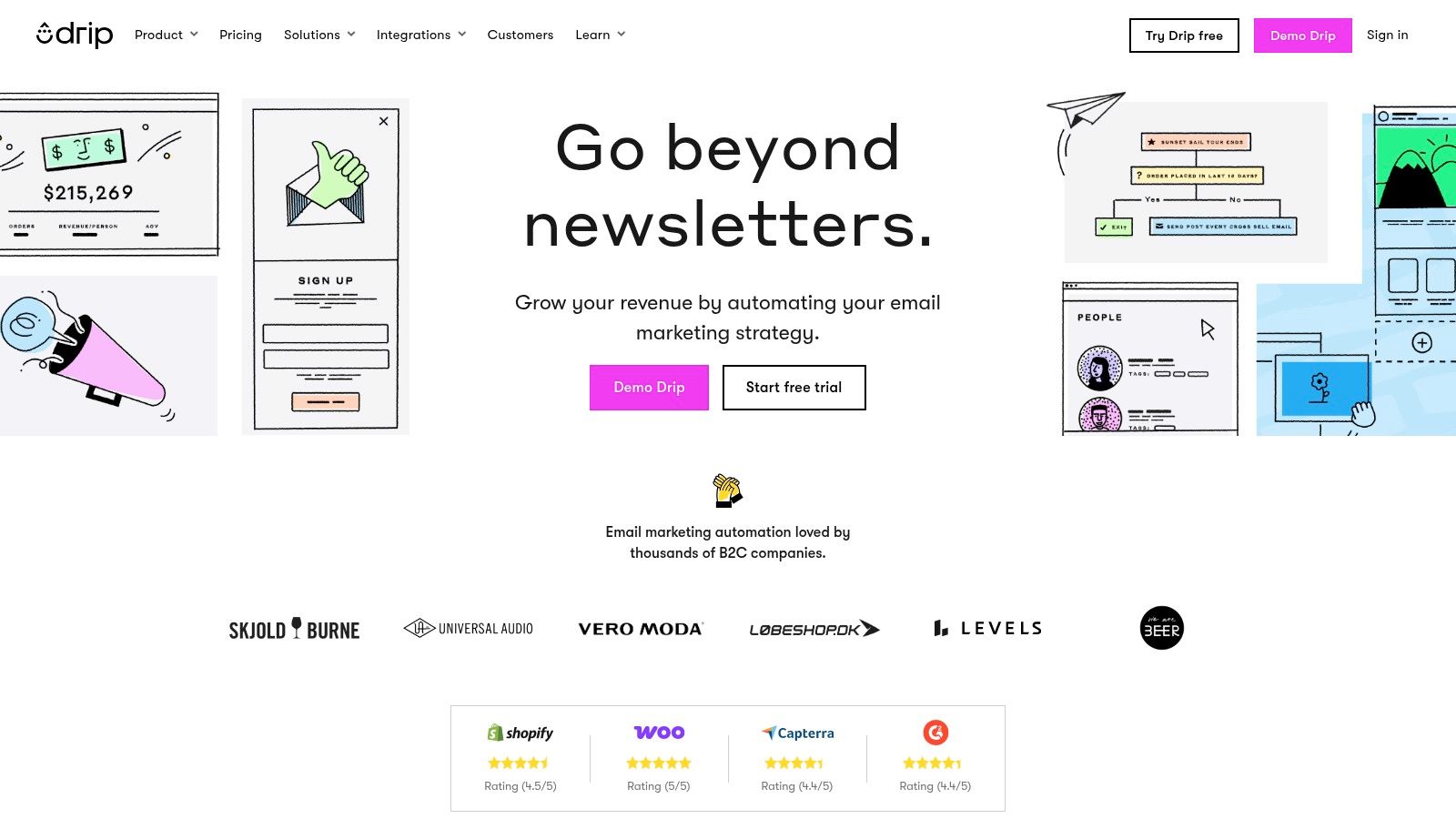
What sets Drip apart is its laser focus on the e-commerce lifecycle and its ability to tie every campaign directly to revenue. The platform's dashboards provide clear insights into how your automations are performing financially, not just in opens and clicks. While its pricing model scales with your active customers and email volume, the unlimited sends offered on paid plans make it a predictable and valuable investment for online retailers focused on maximizing customer lifetime value.
Website: https://drip.com
Key Information
| Feature | Details |
|---|---|
| Best For | E-commerce businesses needing advanced automation and revenue-focused reporting. |
| Pricing | 14-day free trial. Paid plans start at $39/month. |
| Pros | Strong e-commerce focus with revenue reporting, 14-day free trial without a credit card, good balance of power and usability. |
| Cons | Pricing scales by active customers and email volume; live chat support limited to higher-spend tiers. |
10. GetResponse: The All-in-One Marketing Suite
GetResponse expands beyond typical email marketing automation tools by integrating a full suite of marketing features, including sales funnels, landing pages, and even a webinar builder. This makes it an excellent choice for marketers and content creators who want to manage lead generation, nurturing, and conversion activities all within one ecosystem. Its drag-and-drop automation builder is intuitive, allowing for the creation of complex workflows based on user behavior and engagement triggers.
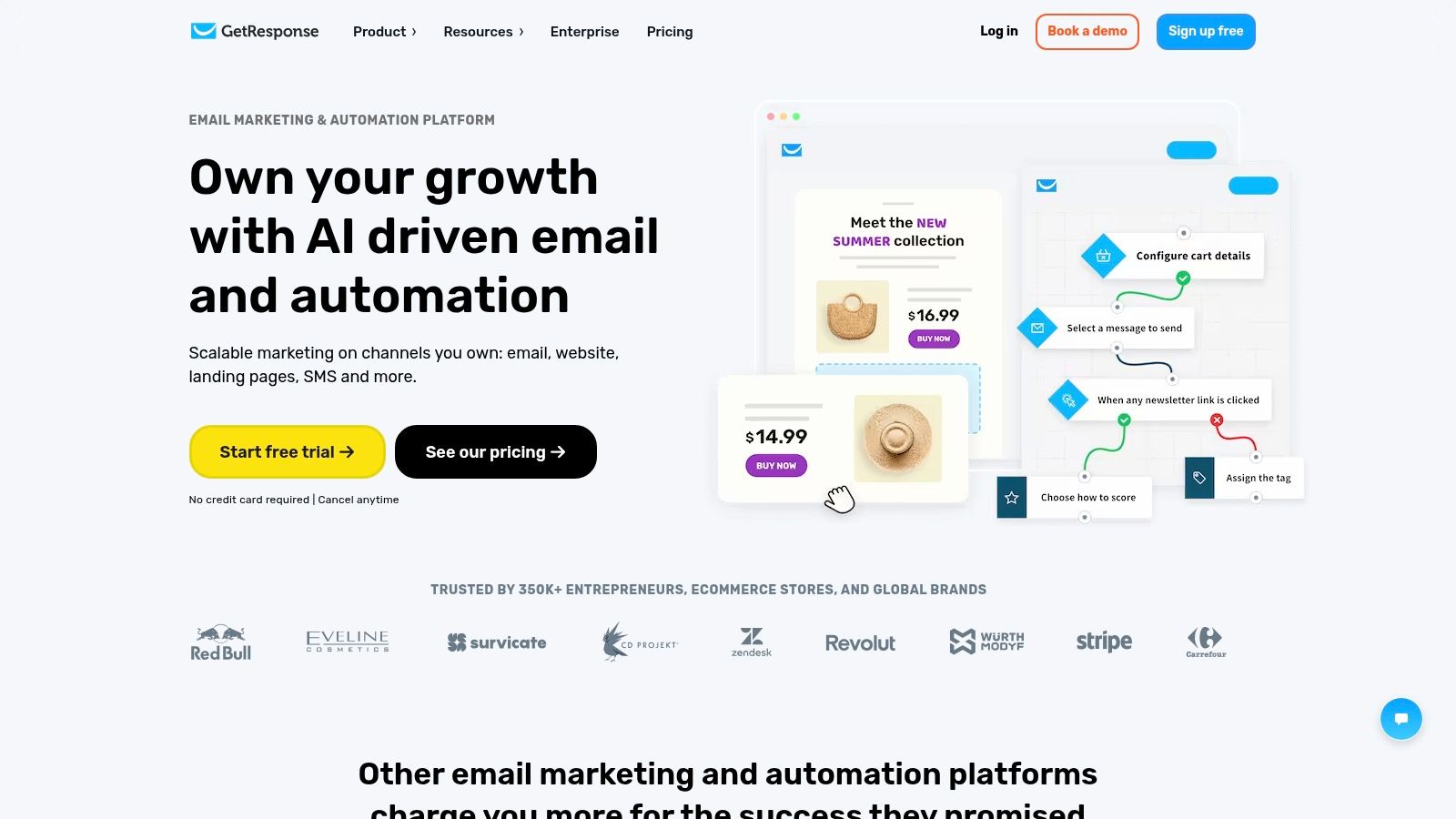
What sets GetResponse apart is its consolidation of tools that often require separate subscriptions, such as webinar hosting. The platform’s AI-powered features, like the AI Email Generator, help streamline content creation, while its conversion funnel builder provides a clear path from ad to sale. A key consideration is that duplicate contacts across different lists are counted separately, which can increase costs if your list management isn't meticulous.
Website: https://getresponse.com
Key Information
| Feature | Details |
|---|---|
| Best For | Marketers and content creators needing a unified platform for email, funnels, and webinars. |
| Pricing | Free plan available. Paid plans start at $19/month. |
| Pros | Integrated webinar and funnel builders, AI content creation tools, generous discounts available. |
| Cons | Duplicate contacts across lists count toward your total, which can inflate pricing. |
11. Campaign Monitor: The Designer's Choice
Campaign Monitor stands out among email marketing automation tools for its emphasis on beautiful, designer-friendly templates and a clean, intuitive user interface. It is an excellent choice for businesses where brand aesthetic is paramount, offering a powerful drag-and-drop builder that makes creating stunning, branded emails straightforward. The platform provides simple yet effective visual automation journeys, perfect for sending welcome series or targeted follow-ups based on user engagement.
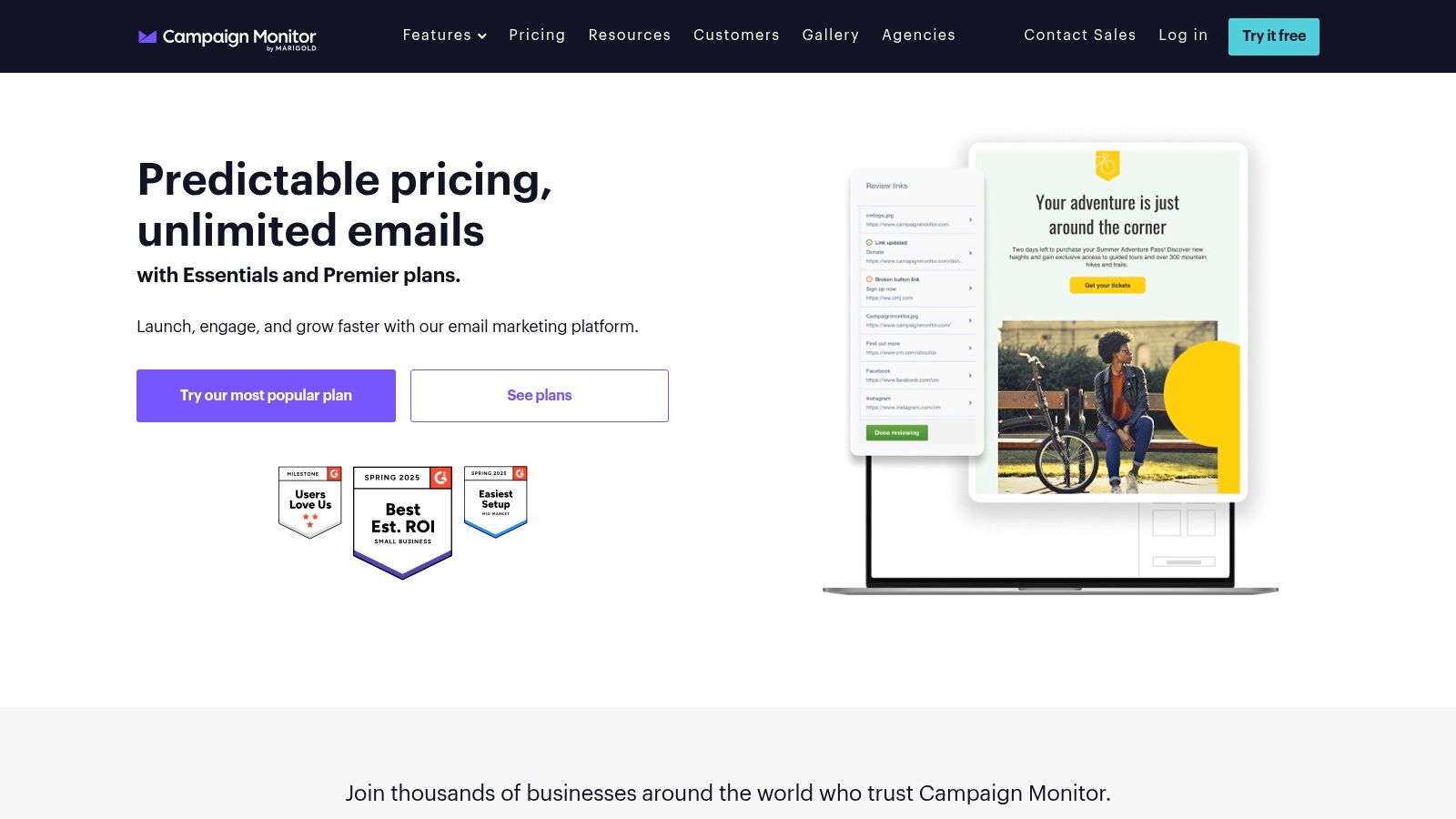
What makes Campaign Monitor unique is its agency-focused features and flexible billing, including a pay-per-campaign option that appeals to infrequent senders or agencies managing multiple clients. Its analytics are clear and actionable, helping you understand campaign performance at a glance. While its free usage is limited to testing with just a few contacts, its paid plans offer robust features like send-time optimization and over 250 integrations, making it a strong contender for design-conscious businesses.
Website: https://campaignmonitor.com
Key Information
| Feature | Details |
|---|---|
| Best For | Agencies and businesses prioritizing high-quality email design and a clean user experience. |
| Pricing | Plans start at $11/month. Pay-per-campaign and nonprofit options are available. |
| Pros | Excellent template/design control, intuitive interface, flexible pay-per-campaign billing. |
| Cons | Free usage is very limited; some advanced features are locked behind higher-tier plans. |
12. Salesforce Marketing Cloud: The Enterprise Powerhouse
Salesforce Marketing Cloud is an enterprise-grade platform that goes far beyond traditional email marketing automation tools. It provides a comprehensive, multi-channel solution designed for businesses that require deep integration with their CRM. The platform's core strength lies in its Journey Builder, which allows for sophisticated orchestration across email, SMS, mobile push, and social channels, all powered by real-time Salesforce data.
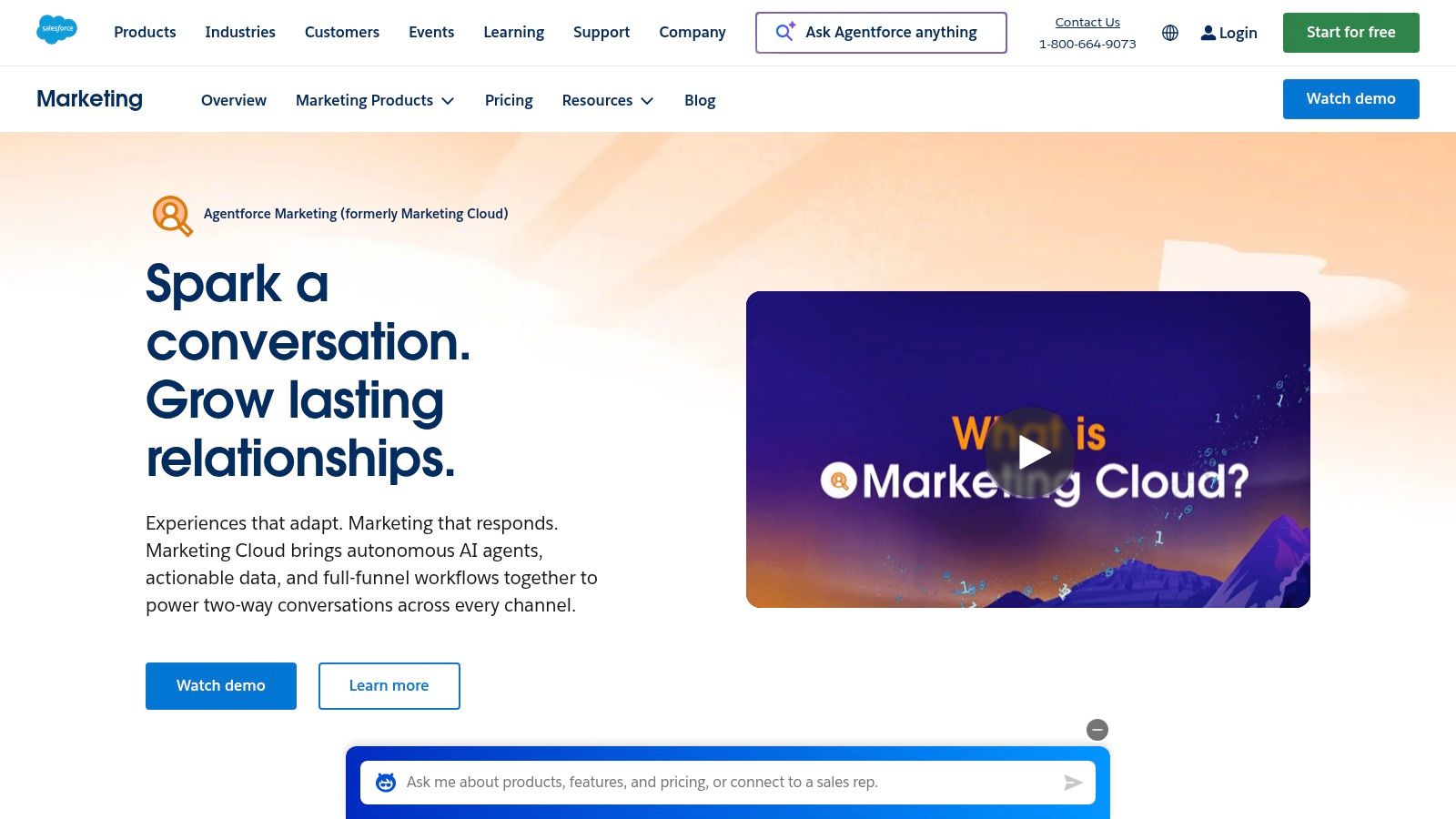
What truly sets Salesforce apart is its ecosystem. With add-ons for personalization, advanced analytics via Data Cloud, and a dedicated B2B module (Account Engagement, formerly Pardot), it offers unparalleled scale for complex lead nurturing and customer lifecycle management. However, this power comes at a cost; the platform has a steep learning curve and requires significant investment in both time and resources for implementation, making it less suitable for smaller businesses without dedicated technical teams. While mastering the platform requires effort, you can always learn more about its technical best practices to maximize its potential.
Website: https://salesforce.com/marketing
Key Information
| Feature | Details |
|---|---|
| Best For | Large enterprises and B2B companies needing deep CRM integration and multi-channel journey orchestration. |
| Pricing | Pricing is quote-based and requires annual contracts, starting at higher price points. |
| Pros | Deep enterprise scale and ecosystem, clear SKU offerings for different needs, high send and contact entitlements on higher tiers. |
| Cons | Higher starting prices and requires annual contracts; implementation requires significant time and resources. |
Email Marketing Automation Tools Comparison
| Platform | Core Features & Automation | User Experience & Quality ★★★★☆ | Value & Pricing 💰 | Target Audience 👥 | Unique Selling Points ✨ |
|---|---|---|---|---|---|
| Mailchimp | Visual journeys, A/B testing, e-commerce add-ons | Large template library, easy onboarding | Free to advanced; pricing grows with contacts | SMBs to mid-market | Commerce integrations, multiseat roles |
| HubSpot Marketing Hub | CRM-native workflows, multi-touch attribution | Enterprise analytics, in-depth segmentation | Per-seat + contacts; onboarding fees | Mid-market to enterprise | Deep CRM integration, advanced reporting |
| Klaviyo | Event-driven flows, email+SMS in one platform | Strong deliverability, revenue tracking | Scales with profile count | E-commerce, Shopify brands | Dynamic product blocks, SMS & WhatsApp support |
| ActiveCampaign | Visual builder, native CRM, 900+ integrations | Powerful automation, learning curve | Contact-based pricing | SMBs | No setup fees, nonprofit discounts |
| Constant Contact | Simple automations, templates, SMS option | Guided onboarding, easy for SMBs | Tiered pricing | Local SMBs | Event and survey tools |
| Brevo (Sendinblue) | Email, SMS, push, chat, AI optimization | Generous free tier, good multi-channel tools | Free + prepaid credits; discounts yearly | SMBs & growing businesses | Multi-channel platform, AI send-time optimization |
| MailerLite | Drag-drop editor, websites, digital sales | Clear pricing, 24/7 support on paid plans | Affordable; unlimited users on advanced | Creators & SMBs | Digital product sales, simple interface |
| Omnisend | E-commerce flows, email+SMS+push | Fast setup, transparent pricing | Free with limits; SMS credits on Pro | Online stores & e-commerce | Bundled SMS credits, Shopify & BigCommerce focused |
| Drip | Visual workflows, event triggers, revenue dashboards | Good balance of power/usability | Pricing by active customers & sends | E-commerce | Deep Shopify/WooCommerce integration |
| GetResponse | Funnels, workflows, webinars, AI tools | All-in-one, tiered discounts | Unlimited emails on paid plans | Marketers & content creators | Integrated webinars, AI features |
| Campaign Monitor | Drag-drop builder, branded templates, automation | Designer-friendly UI, pay-per-campaign option | Flexible billing options | Agencies & SMBs | Pay-per-campaign, strong design controls |
| Salesforce Marketing Cloud | Journey orchestration, personalization, analytics | Enterprise-grade, robust but complex | High price, annual contracts required | Enterprises | Deep Salesforce CRM integration, advanced analytics |
Choosing Your Automation Partner: The Final Step
Navigating the landscape of email marketing automation tools can feel overwhelming. We've journeyed through a comprehensive list, from all-in-one powerhouses like HubSpot and Salesforce to e-commerce specialists like Klaviyo and Drip, and budget-friendly options like MailerLite. The key takeaway is simple: the "best" tool doesn't exist. Instead, the right tool is the one that aligns perfectly with your specific business needs, technical skills, and growth trajectory.
Your decision shouldn't be based on which platform has the longest feature list. It should be a strategic choice rooted in a clear understanding of your goals. Are you a local Austin plumber focused on simple lead nurturing and appointment reminders? A tool like Constant Contact or Brevo might offer the ideal balance of functionality and ease of use. Are you a rapidly scaling e-commerce startup? The deep data segmentation and predictive analytics of Klaviyo or Omnisend will be indispensable for driving repeat purchases.
Key Takeaways and Your Next Steps
Before you commit to a subscription, it’s crucial to map out your implementation strategy. Choosing a tool is only the first step; successfully integrating it into your daily operations is what drives real results.
Here’s a practical checklist to guide your final decision:
- Define Your Core Needs: Don't pay for features you won't use. List your top three to five "must-have" automation capabilities. Is it a visual workflow builder? Advanced A/B testing? A built-in CRM? Let this list be your compass.
- Assess Your Technical Comfort: Be honest about your team's skills. Platforms like ActiveCampaign offer incredible power but come with a steeper learning curve. Conversely, Mailchimp and MailerLite are known for their user-friendly interfaces, allowing you to get started quickly.
- Consider Your Ecosystem: The best email marketing automation tools play well with others. Check for native integrations with your existing software, such as your website platform (like WordPress), your CRM, and your e-commerce store (like Shopify). Seamless integration saves time and prevents data silos.
- Plan for Scalability: Your Austin-based business is poised for growth. The tool that works for you today should also support you tomorrow. Investigate the pricing tiers and feature unlocks. Will the platform become prohibitively expensive as your contact list grows?
Making the Final Choice
The most effective way to validate your choice is to take advantage of free trials or demo versions. Spend a week building a sample automation, importing a small segment of your list, and testing the user interface. This hands-on experience is invaluable and will reveal practical strengths and weaknesses that a feature list can't.
Ultimately, investing in email marketing automation is an investment in building stronger, more profitable customer relationships. By choosing a partner that fits your unique business puzzle, you empower your team to work smarter, not harder, and create personalized experiences that turn leads into loyal advocates.
Feeling overwhelmed by the options or unsure how to integrate these tools into your broader digital marketing strategy? Gidds Media specializes in helping Austin businesses harness the power of automation to drive measurable growth. Visit Gidds Media to see how we can help you choose, implement, and optimize the perfect email marketing solution to achieve your business goals.