Every service business owner asks the same question at some point: how much does advertising cost for a small business? The answer determines whether you grow strategically or burn cash on campaigns that never deliver.
Here’s the reality most agencies won’t tell you: small business advertising costs vary wildly, from $300 to over $6,500 per month. That range is useless without context. What matters is understanding where your dollars go, what returns you can realistically expect, and how to build a budget that aligns with your margins, seasons, and growth goals.
This 2026 breakdown cuts through the noise. We’ll cover the real costs of SEO, paid traffic across Facebook, Instagram, and Google, plus web design investments that actually move the needle. No jargon, no inflated promises: just the numbers and strategy you need to make smart decisions.
The 2026 Advertising Landscape for Service Businesses
The average cost for advertising a small business falls between $300 and $6,500 monthly, with most established service businesses landing somewhere in the $2,000–$5,000 range. But that number means nothing without understanding what you’re buying.
Key Insight: Businesses typically allocate 5–12% of revenue toward advertising. Newer businesses targeting aggressive growth often push toward 15–20%.
The platforms have matured. Algorithms are smarter. Competition is fiercer. What worked in 2023 requires more sophistication: and often more budget: in 2026. But here’s the good news: strategic spending on the right channels delivers better returns than ever before.
Let’s break down the three core investment areas every service business needs to understand.
1. SEO: The Long-Game Investment
Search engine optimization remains the most cost-effective advertising channel for service businesses: when executed correctly. Unlike paid traffic, SEO compounds over time; the content you create today continues generating leads months and years later.
What SEO Actually Costs in 2026
| Service Level | Monthly Investment | What You Get |
|---|---|---|
| DIY/Basic Tools | $100–$500 | Software subscriptions, limited results |
| Freelancer/Consultant | $500–$1,500 | Basic optimization, content support |
| Agency (Mid-Tier) | $1,500–$3,500 | Comprehensive strategy, content creation, link building |
| Agency (Premium) | $3,500–$7,500+ | Full-service SEO with dedicated resources |
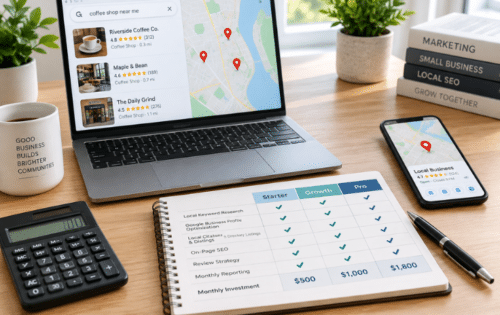
For most service businesses, the $1,500–$3,500 monthly range delivers the best balance of results and ROI. Below $1,000, you’re often paying for activity rather than outcomes.
Why This Matters for Service Businesses
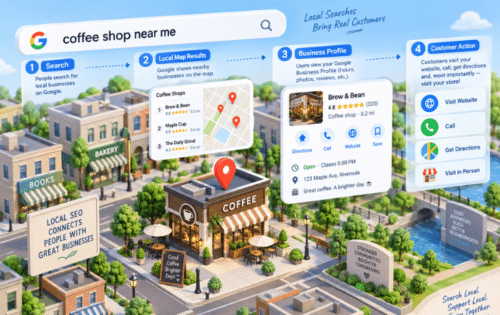
Local SEO particularly benefits service-based companies. When someone searches “HVAC repair near me” or “Austin landscaping services,” appearing in the top three results captures high-intent traffic ready to buy. That visibility doesn’t happen by accident: it requires consistent investment in technical optimization, content creation, and local citation building.
Actionable Steps:
- Audit your current Google Business Profile for completeness
- Identify 10–15 service-specific keywords your ideal customers search
- Budget for at least 6 months of consistent SEO work before expecting significant results
- Consider local SEO services if your business serves a specific geographic area
2. Paid Traffic: Facebook, Instagram, and Google Ads
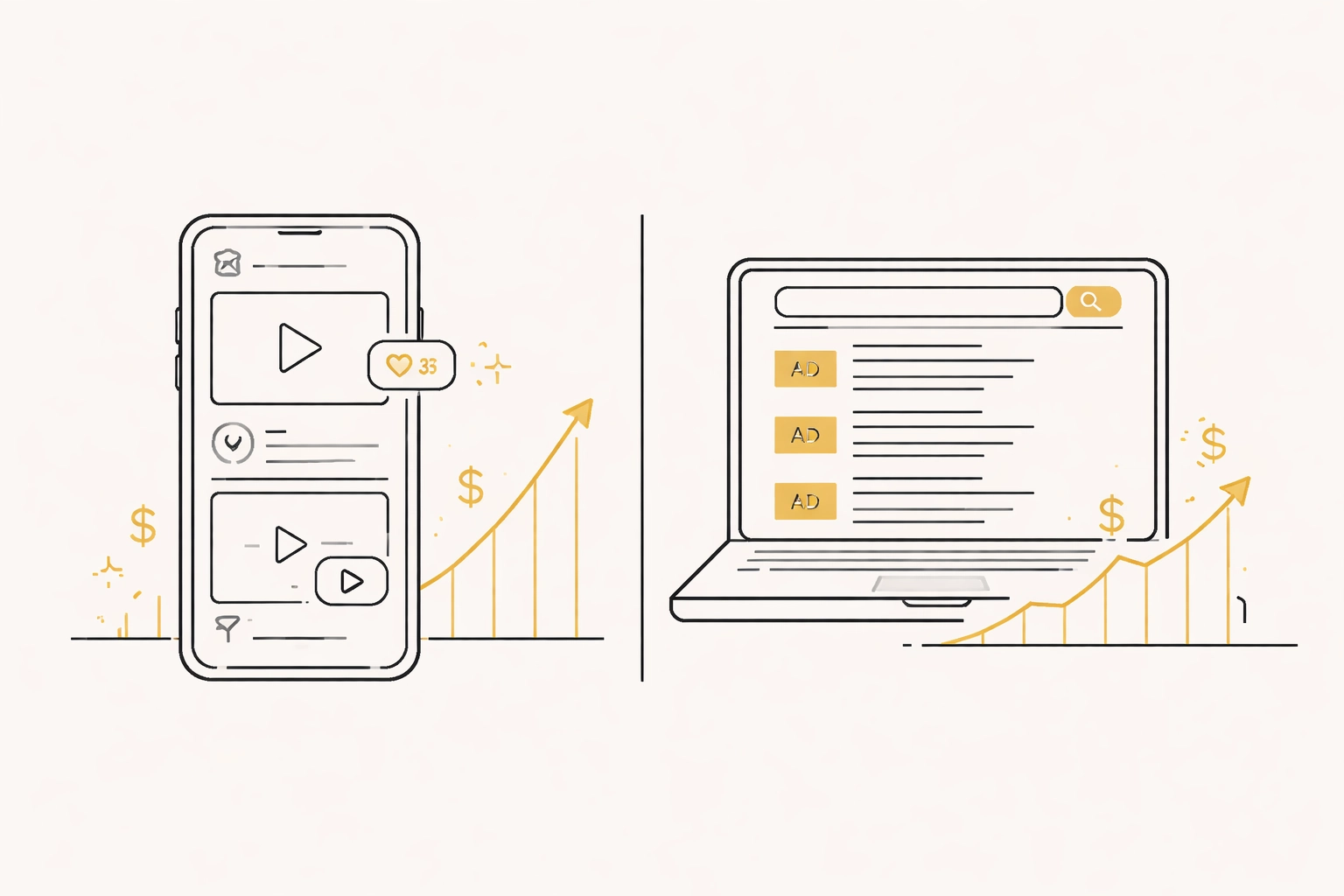
Paid advertising delivers immediate visibility: but at a cost that scales with your ambition. Understanding platform-specific pricing helps you allocate budget where it performs best.
Platform Cost Comparison (2026 Averages)
| Platform | Cost Per Click (CPC) | Cost Per 1,000 Impressions (CPM) | Best For |
|---|---|---|---|
| Facebook/Instagram Image Ads | $0.72 | $10–$15 | Brand awareness, retargeting |
| Facebook/Instagram Reels | $0.40–$1.25 | $2.50–$10 | Engagement, younger demographics |
| Google Search Ads | $1–$5+ | Varies by industry | High-intent purchase traffic |
| Google Display Ads | $0.11–$0.50 | $2–$4 | Remarketing, brand visibility |
Here’s what these numbers mean in practice: Facebook Lead Ads average $27.66 per lead, while Google Ads average $70.11 per lead. Social platforms often deliver more cost-efficient lead generation, but Google captures buyers actively searching for your service.
Budget Allocation by Campaign Stage
Your advertising maturity determines how much you should spend:
- Testing Phase ($750–$1,500/month): You’re learning what works. Expect limited reach but valuable data on messaging and targeting.
- Growth Phase ($2,000–$4,000/month): Consistent visibility with enough data to optimize. This is where most service businesses find their stride.
- Competitive Scale ($5,000+/month): Market-level visibility in competitive industries like home services, legal, or healthcare.
Critical Point: Campaigns under $1,000/month struggle to generate meaningful data. You’re essentially guessing rather than optimizing.
Actionable Steps:
- Start with one platform and master it before expanding
- Allocate 20–30% of your ad budget to testing new creative and audiences
- Review Google Ads best practices before launching search campaigns
- Consider Meta Ads management if you lack internal expertise
3. Web Design: Your 24/7 Salesperson
Your website isn’t an expense: it’s infrastructure. Every dollar spent on advertising drives traffic somewhere; if that destination doesn’t convert, you’re paying for visitors who leave empty-handed.
Web Design Investment Ranges (2026)
| Project Type | Investment Range | Typical Timeline |
|---|---|---|
| Template-Based DIY | $500–$2,000 | 1–4 weeks |
| Freelancer Custom | $2,500–$7,500 | 4–8 weeks |
| Agency Professional | $7,500–$25,000 | 6–12 weeks |
| Enterprise/Custom Development | $25,000+ | 3–6 months |
For service businesses, the $5,000–$15,000 range typically delivers a professional, conversion-optimized site that supports your advertising efforts. Cheap websites often cost more in the long run through lost conversions and constant fixes.
Why Design Quality Impacts Ad Performance
A poorly designed website kills your advertising ROI. If your landing pages load slowly, look dated, or confuse visitors, you’re paying for clicks that never convert. Studies consistently show that even a one-second delay in page load time can reduce conversions by 7%.
Actionable Steps:
- Test your current site speed using Google PageSpeed Insights
- Ensure mobile experience matches desktop quality
- Review SEO-friendly web design principles before your next redesign
- Invest in website performance monitoring tools to catch issues before they cost you leads
Building a Budget That Actually Works
The question isn’t just “how much does advertising cost for a small business”: it’s “how much should my business invest given our margins, seasonality, and growth targets?”
Here’s a framework that works:
Revenue-Based Allocation:
- Maintenance mode: 2–5% of revenue
- Steady growth: 5–10% of revenue
- Aggressive expansion: 10–20% of revenue
Channel Mix for Service Businesses:
- SEO: 30–40% (long-term foundation)
- Paid Traffic: 40–50% (immediate visibility)
- Website/Conversion Optimization: 10–20% (maximize existing traffic)
Strategic Reality: The businesses that win don’t just spend more: they spend smarter. Understanding your customer acquisition cost, lifetime value, and seasonal patterns matters more than hitting an arbitrary budget number.
Partnership Over Tactics
Here’s what most advertising cost breakdowns miss: the numbers only matter if they’re connected to a strategy that understands your business.
A $3,000 monthly ad spend can outperform a $10,000 budget when it’s built around your actual margins, seasonal demand patterns, and capacity constraints. An HVAC company doesn’t need the same advertising approach as a wedding photographer: their customers search differently, buy differently, and respond to different messages.
The difference between wasted advertising dollars and profitable growth comes down to whether your marketing partner understands your business or just understands marketing tactics. Real strategy requires knowing when to push budget during peak seasons, when to pull back, and how to build sustainable lead flow that matches your team’s capacity.
Investing in advertising without understanding these costs leads to frustration and wasted budget. But armed with realistic expectations and strategic allocation, small business advertising costs become an investment in predictable, sustainable growth.
Ready to build an advertising strategy that fits your service business? Let’s talk about what growth actually looks like for your specific situation: no jargon, no pressure, just a clear conversation about what’s possible.