If you’re trying to grow a business online, you’ve probably run into a wall of confusing terms — SEO, PPC, funnels, retargeting — with no clear sense of what any of it actually does for you. So what services do digital marketing agencies offer, and which ones does your business actually need? This guide breaks it down in plain language, service by service, so you can walk away knowing exactly what you’re paying for.
What Services Do Digital Marketing Agencies Offer?
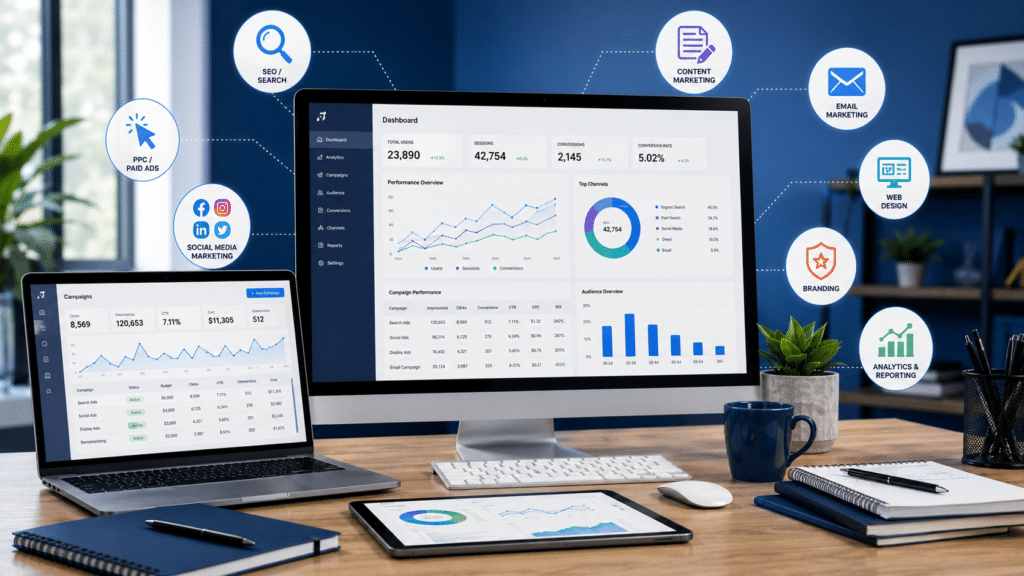
Most full-service digital marketing agencies offer some combination of the following:
- Search Engine Optimization (SEO) — improving your visibility in unpaid Google search results
- Google Ads / Pay-Per-Click (PPC) — paid search ads that appear at the top of search results
- Meta Ads / Paid Social — paid ads on Facebook and Instagram
- Website design and landing pages — the pages that turn visitors into leads
- Content marketing — blog posts, guides, and other content that attracts and educates buyers
- Email marketing — nurturing leads and past customers through their inbox
- Local SEO and reputation management — Google Business Profile optimization and review management
- Analytics and reporting — tracking what’s actually working
According to HubSpot, the core categories of digital marketing include search engine optimization, pay-per-click advertising, social media marketing, content marketing, email marketing, affiliate marketing, and influencer marketing — and most agencies build their service menus around a subset of these, tailored to the type of business they serve.
Not every business needs all of these at once. Below, we’ll go through each service in detail, plus the practical questions that come next: cost, timeline, and how to know what’s right for you.
Search Engine Optimization (SEO)
SEO is the practice of improving your website so it shows up higher in Google’s free, unpaid search results — the listings below the ads.
A typical SEO engagement covers:
- Technical SEO — making sure Google can actually crawl and load your site properly
- On-page SEO — optimizing page titles, headings, and content around what customers search for
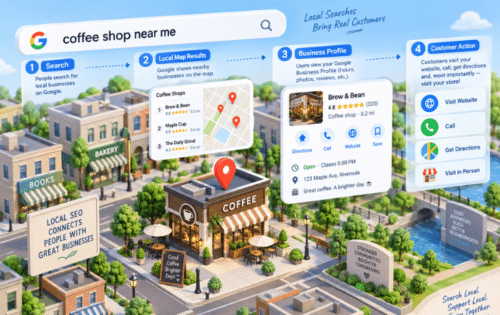
- Local SEO — ranking in the map pack for “near me” and local searches
- Link building — earning credible websites that link back to yours
SEO is a long game. Google’s own SEO Starter Guide notes that changes can take effect anywhere from a few hours to several months, and recommends waiting a few weeks before judging whether an update helped. Most agencies set expectations around a 4-to-6-month runway before SEO becomes a reliable source of leads. If your business can wait that long for compounding, low-cost-per-lead traffic, SEO is usually worth the investment.
Google Ads (Pay-Per-Click / PPC)
Google Ads puts your business at the top of search results for people actively searching for what you sell — right now, not eventually.
Here’s the part most business owners don’t realize: winning ad placement isn’t just about who bids the most. Google Ads Help explains that ad position is determined by an auction that weighs your bid alongside “Quality Score” — how relevant your ad and landing page are to the search — meaning a well-optimized, lower-budget campaign can outperform a bigger budget with sloppy targeting.
A good Google Ads service typically includes:
- Keyword research and campaign structure
- Ad copywriting and testing
- Conversion tracking (so you know which clicks turn into calls or bookings)
- Ongoing bid and budget management
Because you only pay when someone clicks, Google Ads is one of the fastest ways to generate leads — often within days of launch — but the leads stop the moment you stop paying.
Meta Ads (Paid Social)
Meta Ads run on Facebook and Instagram, and work differently from Google Ads. Instead of targeting people actively searching, they put your business in front of people based on interests, behaviors, and demographics — useful for building demand rather than just capturing it.
This service usually includes:
- Audience research and targeting
- Creative production (images, video, or short-form ad content)
- A/B testing different angles and formats
- Retargeting people who visited your site but didn’t convert
Meta Ads tend to work best paired with a strong landing page, since scroll-stopping creative only gets you the click — the page still has to close the deal.
Website Design and Landing Pages
Your website is where all that traffic — organic or paid — actually has to convert into a call, form fill, or booking. A dedicated web design service covers:
- Full website builds or redesigns
- Conversion-focused landing pages built for a specific ad campaign or offer
- Mobile optimization (most local searches happen on a phone)
- Page speed and user experience improvements
This is often the most overlooked piece of the puzzle. Businesses will spend heavily on ads, only to send that traffic to a slow, cluttered, or outdated site that quietly leaks leads. If your current site isn’t built to convert, it’s worth looking at website design and landing page services before scaling up ad spend.
Content Marketing
Content marketing means creating blog posts, guides, videos, or resources that answer questions your potential customers are already asking — building trust and supporting SEO at the same time.
Typical deliverables include:
- Keyword-targeted blog posts (like this one)
- Buyer’s guides and FAQ pages
- Video or visual content for social and web use
Content marketing is a slower burn than paid ads, but it compounds — a well-written guide can keep bringing in traffic and leads for years after it’s published.
Email Marketing
Email marketing nurtures leads who aren’t ready to buy yet and keeps past customers coming back. It’s one of the highest-ROI channels available because you already own the audience — you’re not paying a platform for access each time.
Common uses include:
- Welcome sequences for new leads
- Promotional or seasonal campaigns
- Re-engagement emails for past customers
- Post-service follow-ups asking for reviews or referrals
Local SEO, Google Business Profile & Reputation Management
For any business that serves customers in a specific area — home services, medical, retail — this is arguably the highest-leverage service on this list.
It typically includes:
- Optimizing and actively managing your Google Business Profile
- Building accurate, consistent listings across directories
- Actively requesting and responding to customer reviews
Reviews matter more than most business owners assume. BrightLocal’s 2025 Local Consumer Review Survey found that only about 4% of consumers say they never read online reviews before choosing a local business, and Google remains the dominant platform people check first. A business with a thin or unmanaged review profile is losing customers to competitors before a phone ever rings.
Analytics, Tracking & Reporting
This isn’t a flashy service, but it’s the one that tells you whether everything above is actually working. It typically includes:
- Setting up conversion tracking (calls, form submissions, bookings)
- Monthly or weekly performance reporting
- Dashboards showing cost-per-lead and return on ad spend
Any agency that can’t clearly show you what a lead or a booking cost you isn’t measuring the right things — or doesn’t want you to see the numbers.
How Much Do Digital Marketing Services Cost?
Pricing varies widely depending on the service, your industry, and how competitive your market is. A few common pricing models:
- Flat monthly retainer — common for SEO, content, and management services
- Percentage of ad spend, plus a management fee — common for Google Ads and Meta Ads
- Project-based pricing — common for website builds and landing pages
- Hourly or à la carte — less common, usually for smaller one-off tasks
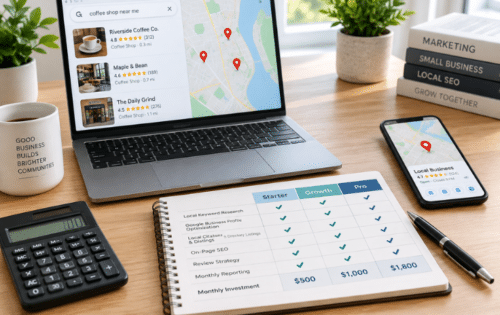
Rather than comparing agencies on price alone, ask what’s included in that price — campaign management, creative, reporting, and strategy calls can all be bundled or billed separately. You can see how services are typically packaged on our services page.
How Long Does It Take to See Results?
Timelines differ a lot by channel:
| Service | Typical time to see results |
|---|---|
| Google Ads / Meta Ads | Days to a few weeks |
| Website/landing page changes | Immediate to a few weeks (once traffic arrives) |
| Local SEO / Google Business Profile | 4–8 weeks |
| Organic SEO | 4–6 months for meaningful traction |
| Content marketing | 3–6+ months, compounding over time |
If you need leads this month, paid ads are the lever to pull. If you’re building for the next three years, SEO and content are where the real long-term value sits. Most established businesses eventually run both — paid for speed, organic for sustainability.
Digital Marketing Agency vs. In-House Team vs. Freelancer
This is one of the first forks in the road for any business owner evaluating options:
- In-house hire — full control and dedicated attention, but you’re paying a full salary for expertise across SEO, ads, design, and analytics that’s hard for one person to cover well
- Freelancer — more affordable than an agency or full-time hire, but usually specializes in one channel and has limited bandwidth for larger campaigns
- Agency — a team with specialized skill sets across channels, established processes, and tools, typically at a lower cost than building the same team in-house
There isn’t a universally “right” answer here — it depends on your budget, how many channels you need running at once, and how hands-on you want to be. We’ve laid out the tradeoffs between hiring an agency and other options in more detail if you want to think it through further.
Are Digital Marketing Services Worth the Investment?
This depends entirely on execution. A well-run Google Ads account paying for itself in booked jobs is a completely different outcome than the same budget spent on an unmanaged, poorly targeted campaign.
The honest answer is that these services are only “worth it” when they’re matched to your business, tracked properly, and given enough time to work — which is exactly why the wrong agency or the wrong channel mix can leave business owners burned and skeptical. If you’re weighing this decision, this breakdown of when these services pay off and when they don’t goes deeper into the numbers.
How to Choose the Right Services for Your Business
A few practical starting points:
- Need leads fast? Start with Google Ads or Meta Ads.
- Building long-term, low-cost traffic? Start with SEO and content.
- Getting traffic but few conversions? Fix your website or landing pages first.
- Getting calls but losing to competitors? Look at your reviews and Google Business Profile.
Most businesses don’t need everything on this list on day one — they need the one or two services that fix the biggest leak first. For a more structured way to evaluate agencies and narrow this down, we’ve put together a step-by-step vetting process worth reading before you sign anything.
Risks and Red Flags to Watch For
A few warning signs worth knowing before you commit budget to any provider:
- Vague reporting — if you can’t see cost-per-lead or cost-per-booking, you can’t judge performance
- Long contracts with no opt-out — good agencies earn renewal through results, not lock-in
- Guaranteed rankings or overnight results — no legitimate SEO provider can guarantee a Google ranking
- One-size-fits-all packages — your industry and market should shape the strategy, not a template
Final Thoughts
Digital marketing agencies offer a wide range of services, but the right mix for your business usually comes down to two questions: how fast do you need results, and how much of the work do you want to hand off? Start with the service that addresses your biggest bottleneck — whether that’s visibility, traffic, or conversions — and build from there.