If you’ve ever typed “is search engine optimization worth it” into Google right before landing on a page like this one, you’re probably staring down a marketing budget and trying to figure out where SEO should fit. It’s a fair question, and the honest answer isn’t a flat yes or no — it depends on a few specifics about your business, your timeline, and what you’re trying to get out of your marketing spend.
Below, we’ll walk through what SEO actually costs, how long it realistically takes, the benefits and risks, and how it stacks up against paid advertising — so you can make the call with real information instead of a sales pitch.
Is Search Engine Optimization Worth It?
For most businesses that have an ongoing stream of customers searching for what they offer, yes — SEO is worth the investment. Once a page earns its ranking, it keeps attracting visitors without you paying for each individual click, which is fundamentally different from how ads work.
That said, SEO isn’t the right first move for everyone. If you need revenue this month, operate in a market with almost no search volume, or are about to pivot your business entirely, paid advertising or other channels may serve you better in the short term. We’ll cover exactly how to weigh that decision further down.
What SEO Actually Involves
Search engine optimization is the practice of making your website easier for Google to find, understand, and recommend to people searching for related terms. Google’s own SEO Starter Guide frames it simply as helping search engines understand your content well enough that the right users can find your site and decide whether to visit.
Importantly, ranking organically doesn’t cost you anything to Google itself. Google is explicit that appearing in search results carries no financial requirement — you’re not paying Google for placement the way you would with a Google Ads campaign. What you’re investing in is the work: content, site structure, technical fixes, and reputation-building that make your pages worth recommending.
If you want the more technical rundown of what a done-for-you program covers month to month, our SEO service page breaks that down in detail.
What Does SEO Cost?
Pricing depends heavily on how competitive your industry is, how much content and technical work your site currently needs, and whether you handle it in-house, hire a freelancer, or bring in an agency. There’s no single number that applies to every business.
We’ve laid out realistic price ranges and what actually drives them — including where cheap SEO tends to backfire — in a separate cost breakdown.
How Long Does SEO Take to Show Results?
This is where a lot of business owners get frustrated, so let’s be direct: SEO is slow at first, then compounds. Search Engine Land’s guide to SEO timelines notes that most sites need three to six months of consistent, well-aligned work before rankings and traffic shift in a meaningful way, and that timeline stretches further in competitive industries.
There’s a nuance worth knowing, too. As Search Engine Journal reported, Google’s John Mueller has explained that a site moving from almost no optimization to basic best practices can sometimes see a fairly quick jump in rankings. After that initial bump, though, progress typically settles into a slower, steadier climb — which is normal, not a sign something’s broken.
Why the wait? Search engines need time to crawl your changes, re-evaluate your pages against competitors, and build enough confidence in your site to rank it consistently. It’s less like flipping a switch and more like building a reputation.
The Real Benefits of Investing in SEO
- It compounds instead of resetting. A well-optimized page can keep bringing in visitors for years, unlike an ad that stops the moment you stop paying for it.
- You’re not charged per visitor. Once a page ranks, additional clicks don’t cost you anything extra the way pay-per-click does.
- It builds a durable asset. The content, structure, and authority you build stick around and often support your other marketing efforts, including ads and social.
- Organic results tend to feel more earned. Many searchers know top organic listings weren’t paid for, which can lend a bit more credibility than an ad in the same spot. In fact, Backlinko’s analysis of over 4 million search results found the top organic listing captures an average click-through rate of roughly 27.6% — a large share of all clicks on that page, concentrated in a single spot.
The Risks and Downsides You Should Know About
SEO isn’t guaranteed, and anyone who promises a specific ranking is overselling. Google itself notes that meeting best practices improves your odds but doesn’t guarantee that any particular page will be crawled, indexed, or ranked.
A few other realities worth planning around:
- Algorithm updates can shift things. Google adjusts its ranking systems regularly, and a page that ranked well last year can move without you changing anything.
- Competitive keywords take sustained effort. Ranking for a term everyone in your industry wants isn’t a one-time project — it’s ongoing.
- Shortcuts can backfire. Tactics designed to game rankings rather than genuinely help users fall under what Google classifies as spam, and can get a site penalized or removed from results entirely.
- It requires patience most owners don’t expect. If your business needs guaranteed traffic starting next week, SEO alone won’t deliver that.
SEO vs. Paid Ads: Which Should Come First?
The two channels solve different problems, and the choice usually comes down to timeline and budget flexibility.
Paid ads (Google Ads, Meta Ads) put you in front of searchers almost immediately. You control the targeting, the messaging, and the budget precisely — but the moment you stop paying, the traffic stops too.
SEO takes longer to get moving, but the traffic it earns doesn’t disappear when you pause spending on a piece of content. It’s a better fit for businesses playing a longer game, or those looking to lower their cost of acquiring customers over time.
Many businesses end up running both — paid ads for immediate pipeline while SEO builds in the background, then leaning more on organic once it matures. If you want to compare how SEO stacks up against our other channels side by side, our full services overview lays that out.
What Ongoing SEO Maintenance Actually Looks Like
SEO isn’t a “set it and forget it” project. Search engines keep changing, competitors keep publishing, and content ages. Realistic ongoing maintenance usually includes:
- Monitoring rankings and traffic for unexpected drops
- Refreshing older content that’s lost relevance or accuracy
- Fixing technical issues as your site grows or changes
- Building on what’s already working instead of starting over each quarter
Businesses that treat SEO as a one-time setup rather than an ongoing practice tend to see their early gains erode over time.
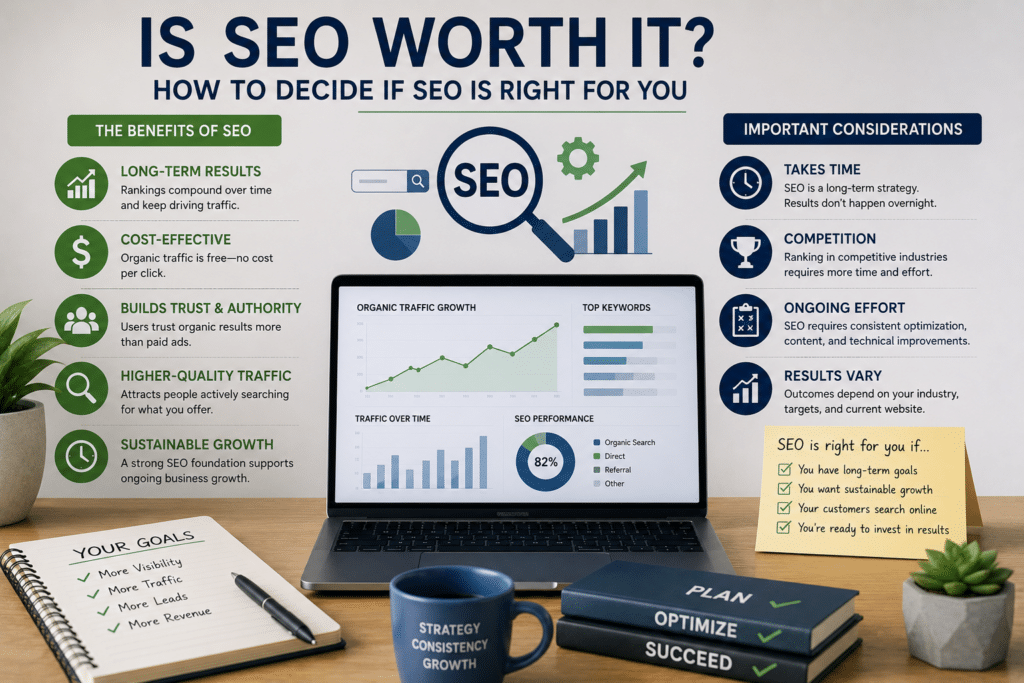
So, Is SEO Right for You Right Now?
A few honest signals can help you decide:
SEO is probably a good fit if:
- People search for what you offer on a regular, ongoing basis (not just seasonally or once)
- You can commit to at least 4–6 months before expecting meaningful movement
- You want to lower your long-term cost of acquiring customers, not just get quick wins
It might not be your priority yet if:
- You need revenue in the next few weeks and have no runway to wait
- Your offer is extremely new or your market barely searches for it yet
- You’re about to change your business model, service area, or branding significantly
If you’re unsure which bucket you fall into, or whether it makes more sense to handle this internally versus bringing in outside help, we go deeper on that specific decision here.
Getting Started
If you’ve decided SEO deserves a real shot, the next step is understanding exactly where your site stands today — not guessing. That usually means a quick, honest look at your current rankings, technical health, and competitors before committing budget to anything.
That’s the kind of starting point we can walk you through at Gidds Media: a clear picture of where you stand so you’re investing in SEO because the data supports it, not because someone told you it’s trendy.