You’ve seen other installers running ads on Facebook and Instagram. Maybe you’ve even boosted a post or two and gotten a handful of messages that went nowhere.
So it’s a fair question: do Facebook ads work for artificial turf companies, or are they just a quick way to burn through a marketing budget? This guide gives you a straight answer, then walks through cost, timing, setup, and the mistakes that sink most turf campaigns.
Do Facebook Ads Work for Artificial Turf Companies?
Yes, they can, and they often work well. But they work in a different way than search ads, and that difference decides whether you make money or lose it.
Most homeowners aren’t searching for “artificial turf installer” every day. Facebook lets you reach them before they start looking, with photos of a yard they’d love to have.
Facebook ads tend to work for turf companies when:
- You have strong before-and-after photos and short videos of real installs
- You can call new leads back quickly, ideally within minutes
- Your average job is large enough to cover a testing period
- You track which leads turn into booked jobs, not just how many leads come in
They tend to struggle when:
- The business relies on stock photos and generic “eco-friendly” messaging
- Leads sit for a day or two before anyone calls
- The budget is too small to test more than one or two ads
- Success is judged only by how cheap each lead is
Why Facebook Is a Good Fit for Turf Companies
Turf Sells Visually
Artificial turf is a “see it to want it” product. A dusty, patchy backyard next to a clean green lawn makes the case faster than any headline.
Facebook and Instagram are built around images and short video. That plays directly to the strength of a turf business.
Your Buyers Are Already There
Facebook is still one of the most widely used platforms in the country. According to Pew Research Center’s 2025 social media survey, 71% of U.S. adults use Facebook and about half use Instagram.
Pew also found Facebook is used by a majority of adults in every age group, with use highest among 30- to 49-year-olds (80%). That lines up well with the homeowners who typically buy turf.
You Can Keep Ads Inside Your Service Area
Meta’s ad system now treats many audience settings as loose suggestions. But location is different.
Meta’s own advertising documentation confirms that location limits are not expanded, even when its automated targeting is switched on. For a local installer, that means you can keep spend focused on the ZIP codes and cities you actually serve.
The Pain Points Are Easy to Show
Turf buyers usually want to fix a problem they live with every week:
- High water bills in summer
- Mowing, edging, and fertilizing
- Muddy paws and dead spots from dogs
- Shady areas where grass won’t grow
- A backyard the kids can’t use after rain
Water cost is a big one in drier regions. The EPA’s WaterSense program reports that outdoor use makes up more than 30% of household water use on average, and as much as 60% in arid areas.
Where Facebook Ads Fall Short
Facebook is not a magic lead machine. Knowing the weak spots upfront saves a lot of wasted spend.
People Aren’t Actively Shopping Yet
Someone scrolling Facebook wasn’t looking for turf five seconds ago. Many leads will be curious, not ready to buy this month.
That’s why follow-up, reminders, and a clear quoting process matter as much as the ad itself.
Easy Forms Can Bring in Low-Quality Leads
Facebook’s built-in lead forms are fast. Meta notes these forms use information people have already shared with Facebook, so contact details fill in automatically.
That convenience cuts both ways. A two-tap form brings more leads, but also more people who forget they ever filled it out.
Ads Get Stale Quickly
The same ad shown to the same local audience starts to lose steam. Plan to refresh photos and videos regularly, especially in smaller towns.
Results Depend Heavily on Follow-Up
A turf lead that waits a day for a callback often goes cold. Many campaigns that “don’t work” are actually follow-up problems, not ad problems.
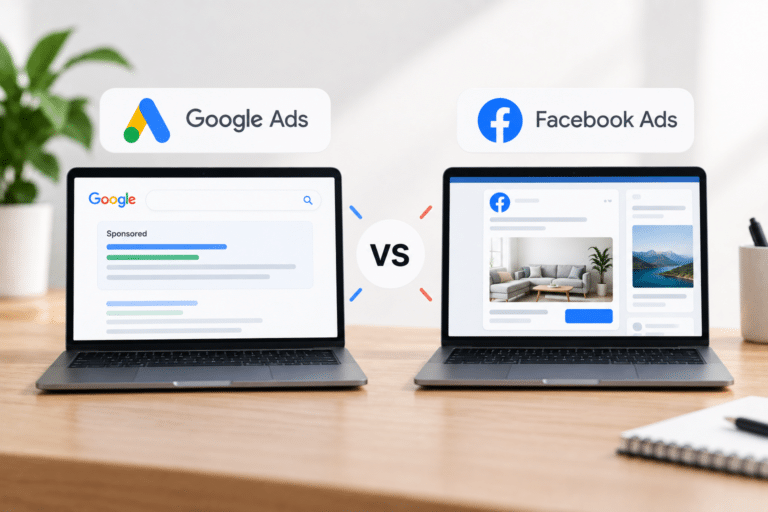
Facebook Ads vs. Google Ads: Which Should You Start With?
The simplest way to think about it:
- Google Ads reach people who are already searching for turf installation. Intent is higher, but you compete for a limited number of searches.
- Facebook ads create new interest among homeowners who weren’t searching yet. Volume is higher, but leads need more nurturing.
Many established turf companies end up using both. Google captures people ready to buy now, while Facebook fills the pipeline and keeps your name in front of local homeowners.
If you’re trying to decide where your first dollar should go, we break down how the two platforms compare for turf installers in a separate guide.
How Much Should a Turf Company Spend on Facebook Ads?
There’s no single “right” budget. Costs vary by city, season, competition, and how good your ads are, so be wary of anyone quoting a universal cost per lead.
A better approach is to work backward from your own numbers.
Work Out What a Lead Is Worth to You
Here’s a simple example. These are made-up numbers for illustration, not industry benchmarks.
- Your average residential job brings in $6,000
- You’re willing to spend 10% of revenue to win a job, so $600 per sale
- You close about 1 in 5 leads you quote
- That means you can afford up to $120 per lead and still hit your target
Swap in your own job value and close rate. This tells you whether a campaign is working far better than comparing costs with another business.
Budget for a Testing Period
Your first few weeks are about learning which ads, offers, and audiences bring real buyers. Expect some ads to fail.
A budget that’s too thin can’t test enough to find the winners. If money is tight, it’s usually better to run fewer ads with enough budget behind them than to spread a small amount across many.
Remember the Cost of Ad Management
Your total investment includes ad spend plus the time or fees for building and managing campaigns. If you want a clear picture for your market, you can book a consultation to talk through realistic numbers.
How Long Does It Take to See Results?
Leads can start coming in within days of launching. Seeing whether those leads turn into profitable jobs takes longer.
A realistic timeline looks like this:
- First 1–2 weeks: Ads launch, Meta’s system starts learning, and early leads arrive
- Weeks 2–6: You compare ads, cut what isn’t working, and tighten lead quality
- Months 2–3: You have enough booked jobs to judge return on spend
Turf jobs often involve site visits, quotes, financing, or HOA approval. So a lead from this week may not become a sale for a month or more. Judge results on that longer window.
What a Turf Facebook Campaign That Works Looks Like
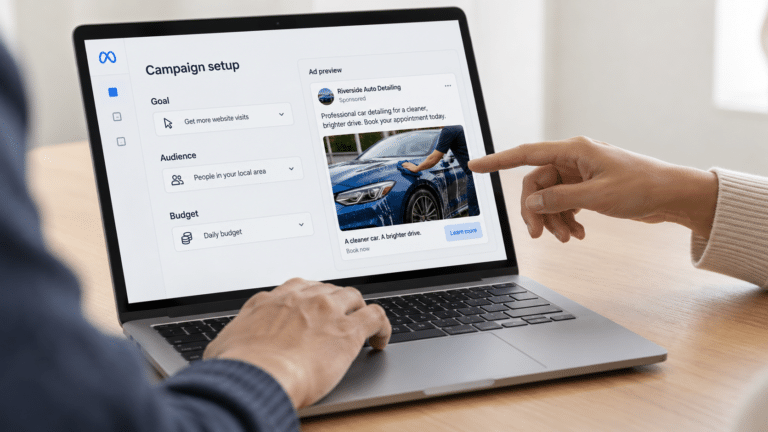
Pick the Right Campaign Goal
For most turf companies, a campaign built to collect leads is the right starting point. Boosting a post from your page is not the same thing, and usually gives you far less control.
You’ll choose between Facebook’s built-in form and sending people to a page on your website. The built-in form is quicker for the customer. A website landing page usually brings fewer but more serious leads.
Make Your Lead Form Do Some Filtering
A few smart questions can save your sales team hours of calls:
- Is this a home or a business property?
- Roughly how large is the area (small, medium, large)?
- What’s the project for (front yard, backyard, pet area, putting green)?
- When are you hoping to start?
- What’s your ZIP code?
Meta’s form builder also has a “Higher intent” option that adds a review step before someone submits. It typically lowers volume but filters out accidental sign-ups.
Use Real Photos From Real Jobs
Real installs from your own area beat polished stock images almost every time. Neighbors recognize the style of homes, and it builds trust that you actually work nearby.
Short videos work well too: a quick walk-through of a finished yard, a dog playing on new turf, or a time-lapse of an install.
Lead With a Clear, Honest Offer
Give people a reason to raise their hand now. Good examples include:
- A free on-site measurement and quote
- A design preview of their yard
- Financing options, if you offer them
- A limited seasonal discount you can actually honor
Call Leads Back Fast
Connect your lead form to a system that alerts your team the moment a lead comes in. Then call, text, and email in that order.
A same-day callback should be the minimum. Within minutes is better.
Tell Meta Which Leads Became Customers
This step separates average campaigns from strong ones. If you only tell Meta “this person filled out a form,” it will find more form-fillers, good or bad.
Meta offers a “Conversion Leads” goal that learns from your sales outcomes. According to Meta’s setup guide, you can start using this goal without connecting your customer system, but results improve once that connection is fully in place.
In plain terms: when you mark a lead as “quoted” or “sold” in your customer system, that information flows back to Meta. Over time, Meta learns to find more people like your real buyers.
Ad Ideas That Tend to Connect With Turf Buyers
You don’t need clever slogans. You need to show a specific problem and a believable fix. Ideas worth testing:
- Pet owners: “No more muddy paws or yellow spots”
- Busy families: “Get your weekends back from mowing”
- Water bills: Show a summer yard and talk about cutting outdoor watering
- Shady yards: “Green grass where real grass won’t grow”
- Backyard upgrades: Putting greens, play areas, and pool surrounds
- Commercial properties: Low-upkeep areas for offices, apartments, and HOAs
A handy research tip: browse the free Meta Ad Library to see what ads are running in your area. It’s a quick way to spot what’s overused and where you can stand out.
Mistakes and Risks to Avoid
Making Vague “Green” Claims
Calling turf “eco-friendly” without explaining why can land you in trouble. The FTC’s Green Guides caution businesses against broad, unqualified environmental claims like “green” or “eco-friendly.”
Be specific instead. “No watering needed” or “no mowing or fertilizer” are clearer and easier to back up.
Promising Rebates That Don’t Apply
Many water rebate programs exclude artificial turf. For example, San Diego County’s turf replacement page states that artificial turf is not permitted under the SoCal WaterSmart turf replacement rebate.
Check your local water agency’s rules before mentioning rebates in any ad.
Judging Success by Cost Per Lead Alone
Cheap leads that never book are expensive. Track leads all the way to quotes and signed jobs, then decide what’s working.
Running Ads Without Tracking
If you can’t tell which ad produced which job, you’re guessing. At a minimum, label every lead by its source and track it to close.
Setting It and Forgetting It
Facebook campaigns need regular attention: new creative, budget shifts, and lead quality checks. A campaign left alone for months usually drifts downhill.
When Facebook Ads Are the Right Choice (and When They’re Not)
Facebook ads are a strong fit if you:
- Serve residential customers in a defined local area
- Have photos and videos of finished jobs
- Want more leads than search ads alone can deliver
- Have someone who can follow up quickly and consistently
You may want to wait or start elsewhere if you:
- Can’t handle more leads right now
- Have no real project photos yet
- Mostly sell large commercial or sports field projects through bids and relationships
- Can’t commit to at least a couple of months of testing
Frequently Asked Questions
Are Facebook leads lower quality than Google leads?
Often, yes, at least at first. Facebook reaches people earlier in their decision. Better lead forms, faster follow-up, and sending sales data back to Meta can close much of that gap.
Should I advertise on Instagram too?
Usually, yes. Facebook and Instagram ads are managed in the same place, and Instagram’s visual feed suits turf well. Meta can split your budget between them automatically.
Can I run Facebook ads myself?
You can, and plenty of owners start that way. The learning curve is in tracking, testing ads, and filtering lead quality. Many owners bring in help once spend grows or results stall.
Do I need a website to run Facebook ads?
Not strictly, because Facebook’s built-in forms can collect leads without one. But a solid website builds trust when people look you up before calling back, and most will.
Is Facebook better than Google for a new turf company?
It depends on your goals and budget. We compare the trade-offs in our guide on choosing between Facebook and Google for turf leads.
The Bottom Line
Facebook ads can be a reliable source of jobs for artificial turf companies. The installers who succeed pair strong visuals with honest offers, quick follow-up, and tracking that goes all the way to the sale.
If you’d rather not spend months figuring that out alone, Gidds Media works with turf businesses on exactly this. You can see how we approach marketing for artificial turf companies, or learn more about our Facebook and Instagram ad management.
Ready to talk numbers for your market? Schedule a consultation or reach out to our team with any questions.